



Blog & Videos

many benefits of outdoor play

The Many Benefits of Outdoor Play and 3 Activities Your Preschooler Will Love

If you have heard that the rules around mobile phones and electronic devices in early childhood settings have changed, you are right. If your child attends a childcare centre in NSW, these changes are already in effect.

Here is a plain-English breakdown of what changed, why it happened, and what it means for your family.

Why Did the Laws Change?

The changes were introduced as a child safety measure. In 2025, Australia’s Education Ministers agreed to amend the Education and Care Services National Law to address concerns about the potential for personal devices to be used to capture, store, or transmit images of children in care without authorisation.

The intent is straightforward: children in early learning settings deserve an environment where their privacy and safety are actively protected.

What Changed Nationally

From 27 February 2026, amendments to the national Education and Care Services National Law took effect across Australia. Under these changes, educators and staff who work directly with children are restricted from using personal electronic devices in care settings.

Before this, from 1 September 2025, all early childhood education and care services nationwide were required to have written policies in place addressing the use of digital devices.

What Changed in NSW

NSW moved ahead of the national timeline. The Education and Care Services (Supply, Authorisation and Use of Devices) Order 2025 took effect on 6 November 2025, applying across NSW’s 6,000 or more early learning services, including long day care centres, preschools, and family day care.

Under this order, educators and staff must use service-issued or service-authorised devices rather than their own personal devices when working directly with children.

What Counts as a Personal Device?

The definition is broad. A personal device is any device owned by an individual (not the approved provider) that is capable of capturing, storing, or transmitting an image. This includes:

  • Mobile phones
    Smartwatches
  • Cameras and tablets
    iPads and laptops
  • Hard drives, USB drives, and memory cards
  • Wearables such as camera glasses

Who Does the Ban Apply To?

The restrictions apply to anyone working directly with children at a service, including permanent and casual educators, students on placement, volunteers, contractors, and allied health professionals delivering programs on-site.

Parents, carers, and other visitors are not covered by the ban. In NSW, parents and carers remain free to use their personal devices during drop-off, pick-up, centre visits, and events involving their own children. There are also authorised exceptions for essential purposes, including emergencies and health or disability support needs.

What About Screen Time for Children?

These new laws specifically address staff device use, not children’s screen time. Screen time limits for young children are not mandated within childcare regulation at a national level.

The relevant guidance comes from the federal Department of Health and Aged Care’s 24-Hour Movement Guidelines, which recommend no screen time for children under 2 years, and no more than 1 hour per day for children aged 2 to 5 years. These are health guidelines, not regulatory requirements.

What This Means for Your Family

If your child attends a childcare centre in NSW, their service is already required to operate under these rules. Any educator or staff member working directly with your child should not be using a personal device to take photos or videos. Only service-authorised devices should be used for that purpose.

If you have questions about how your centre handles digital devices or image capture, you are well within your rights to ask. Most services will have a written policy in place that covers exactly this.

At Clovel, the safety and wellbeing of every child in our care is at the heart of everything we do. If you would like to know more about how we support your child across our centres, we would love to have that conversation with you.

Those of us of a “certain age” have heady memories of spending our weekends and summers entertained in outdoor play. Many of us set off on foot or bicycle when the sun came up and didn’t return home until we were reminded it was almost dinner time by the street lights flickering on and the sun dipping down.

But technology and endlessly available children’s programming on television have many children withdrawing indoors and away from the many benefits of outdoor play.

And rest assured…there are so. many. benefits.

In fact, we thought the subject utterly blog-worthy, so we will be sharing a few benefits of outdoor play and 3 activities you can provide that will have your children looking forward to a little outdoor entertainment.

What’s so great about outdoor play?

1. It promotes good health

There’s something to be said about enjoying the sunshine and fresh air found outdoors, and playing outside allows children to improve their health, something of great importance considering 1 in every 4 Aussie children between the ages 2 – 17 years struggle with obesity. But recent research has indicated that time spent outdoors lower obesity rates. Case in point, a recent study found that children who spent more time playing outside had a lower body-mass index (BMI) when compared to children who played outdoors less.

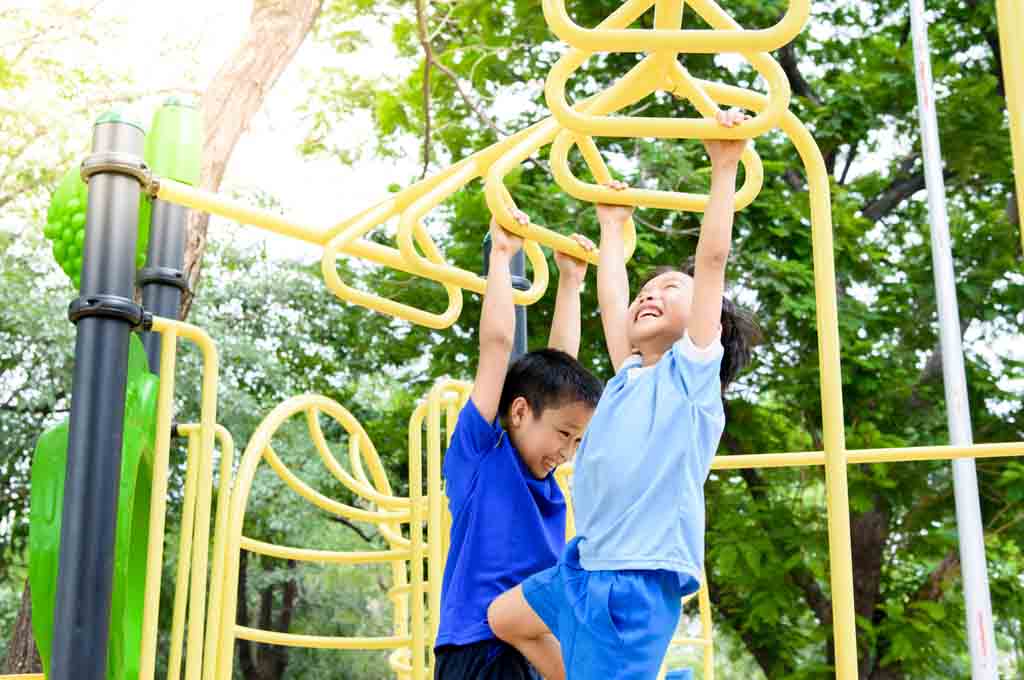
While playing outdoors children are running, jumping, climbing, and crawling…and burning plenty of calories in the process.

2. It strengthens motor skills

When we say motor skills, we’re talking about both gross motor skills (those used to move the larger muscle groups found in the arms, legs, and trunk of the body) and fine motor skills (those found in the wrists, hands, and fingers).

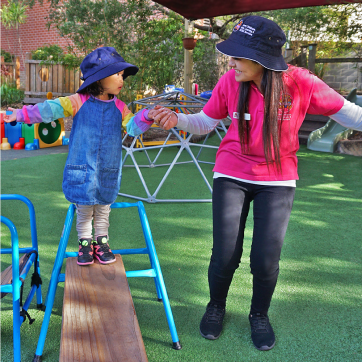
Activities like running, jumping, rolling, and crawling all strengthen gross motor skills while climbing trees, picking flowers, and collecting rocks strengthen the fine muscles of the body that will be so important in later learning as children work to hold writing utensils, button buttons on clothing, and pull zippers on coats and jackets.

3. It instills a lifelong love for nature

A recent study conducted by Cambridge University found that children who spent time playing outdoors grew into adults with a deep love for and desire to protect the environment.

As children play outdoors, they get to experience the natural world and are immersed in the beauty of our planet. The outdoors becomes, in a sense, a second home, and children are able to connect with their natural desire to interact with and explore the mysteries of the great wide open.

Activities to Encourage Outdoor Play

Water, Water Everywhere

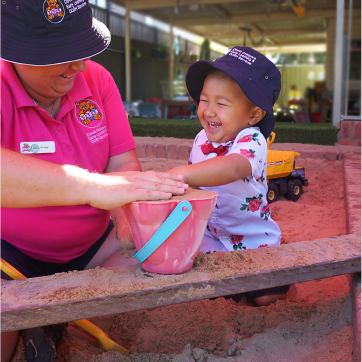
Water play was made for outdoor enjoyment. While many assume this means going off to a local pool, there are plenty of other water activities that are just as fun. If you live somewhere without a community pool, you’ll be happy to know that preschoolers can have just as much fun in a backyard blow-up pool or splash pad.

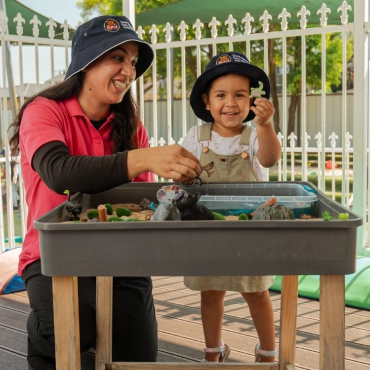
Water guns are another fine option and are wonderful for strengthening the fine muscles in the fingers. And don’t forget about water tables which can be used to explore a variety of scientific concepts under the guise of play.

Plan an Outdoor Scavenger Hunt

Exploring is one of the best parts of being outdoors, and a scavenger hunt makes it even more exciting!

Make a list of things that can be found in your area—flowers, trees, squirrels, ducks, etc. Give the list to your child and head out for a walk in your neighborhood or local park, asking your child to mark items off the list as they discover them.

If your child is not yet reading, he or she can still get in on the fun. The internet is full of free, downloadable nature scavenger hunt sheets that use pictures rather than words (we love these created by the Pragmatic Parent).

Visit a Local Outdoor Destination

Whether you live on the coast, in the mountains, or on the flatlands, there are bound to be plenty of outdoor destinations near you.

Plan a trip to the beach. Schedule a tour of a local farm. Head to the nearest pumpkin patch or drive to the closest zoo. The possibilities are literally endless, and each will provide its own unique teachable moments.

No matter how you get your child outdoors, making sure they increase their time playing and learning outside will benefit your little love…both in the short and long term. And don’t forget to include your child in the planning process. Giving them some control over where they get to go increases the likelihood that they will actually enjoy the adventure instead of having to be drugged along for the ride.

Thanks for reading,
Clovel Childcare
1300 863 986

Lyn Connolly
Founder and Company Director

Lyn Connolly is the Founder and Company Director of Clovel Childcare & Early Learning Centres, a family‑owned group of eight centres across Western Sydney established from her first service at Merrylands. Active in early childhood education since 1977, she also serves as President of the Australian Childcare Alliance (ACA) NSW, representing providers in state and federal consultations, media, and public hearings.

Still Have Some Questions?