



Odds are high that crafting is an integral part of your preschool memories. Be truthful…how many macaroni necklaces did you make in your youth? As it turns out, crafting is not just an ingenious idea drummed up by teachers to keep wiggly preschoolers occupied until it’s time to go home. There are very real benefits to engaging in the crafting process.
What’s so great about crafting?
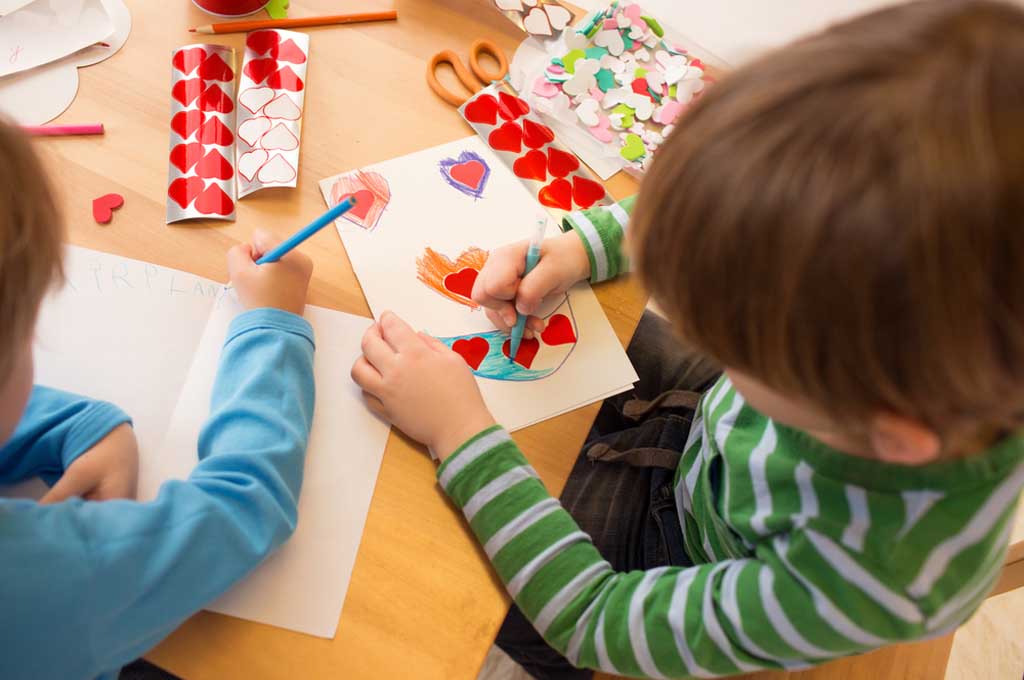
Lots, actually. Just the very act of picking up and holding paper in one while using scissors with another improves a child’s fine motor skills, as does gripping crayons or markers, gluing beads, and stringing dried macaroni for that classic necklace we all remember.
Crafting also helps children learn colors, numbers, and to recognize patterns. And there’s something to be said for the critical thinking that must take place while crafting as children work through the steps to get their final product to match the example created by the teacher.
Through crafting, children also get to explore their own artistic individuality, thereby building positive self-esteem.
We can’t overstate the importance of crafting in early childhood development but having a well-stocked craft closet (or even basket) doesn’t have to break the bank. Here are 5 of our favourite arts and crafts supplies to keep on hand for your preschooler…and some of them may surprise you.
1. Drawing Utensils
This is likely a no-brainer, but any good crafting kit should include a variety of drawing utensils: regular and colored pencils, crayons, markers (you may want to opt for the washable variety), and pens.
2. Construction Paper
Construction paper in a variety of colors can be used for so many activities! Use it to make a paper chain. Cut out shapes to glue on another piece of paper. Make a pinwheel or paper tube animal. If you need more inspiration for construction paper projects, a quick Google search will offer an endless supply of options. We love this list from the folks over at Fatherly.
3. Paint
Some parents cringe at the thought of giving their preschooler paints, but it is such a wonderful medium for creation that we strongly encourage you to give it a try. Keep a variety of paints on hand including poster paint, watercolor paint, tempera paint sticks, and oil pastels. Once again, the internet is where you’ll find plenty of paint inspiration, but if you’re not interested in hunting down a list on your own, check out this list of painting activities from the Artful Parent.
4. Playdough and Modeling Clay
Doughs and clays are excellent for strengthening the fine muscles found in the wrists, hands, and fingers, muscles children will use later in their educational careers as they learn to properly hold writing instruments.
One of our favourite things about playdough is the fact that it is surprisingly easy to make at home. We love this recipe from the Artful Parent since it requires no baking (some do). If you’d rather not take the time to make the dough at home, classic Play-Doh is available at most stores selling children’s toys or online.
Modeling clay is usually oil-based, so care should be taken as it can stain fabric. But children love sculpting their own unique creations, and some clay hardens when left exposed to air, allowing children to create their own pottery dishes, vases, and sculptures.
5. Pre-packaged Craft Kit
If you want your child to enjoy the benefits of crafting but just don’t have the room to store tons of craft supplies, fear not. There are plenty of online sites offering pre-packaged craft kits that come with all the crafting supplies your child will need. Kidz Inc. has an amazing collection of craft kits available for children of all ages. We love this set that allows children to make their very own space-themed refrigerator magnets and badges using plaster and paint…and everything you need is right in the box!
Tips for Making Arts and Crafts Fun
- When it comes to your budding artist, encouragement is key. Don’t focus on how much your child’s version of the project looks like the example. Instead, celebrate their creativity and explore what makes your child’s art so uniquely wonderful.
- Put finished art pieces on display. Reserve a space of honor centrally located in your home where your child’s projects can be displayed for a time. Some parents opt to hang art cabinet frames like this one that allow the artwork to be swapped out easily.
- Take time to discuss your child’s finished project with them. What did they love about the creation process? What inspired them? What was challenging about the experience and what made them persevere? Asking questions opens the door for real bonding to happen.
And so…
Encouraging your child to embrace arts and crafts can lead to an appreciation of the arts that will follow your child throughout their educational career and well into adulthood. Here’s to allowing little crafters to express themselves in their own artful way!
Thanks for reading,
Clovel Childcare
1300 863 986