

Blog & Videos

creative learning and development for children

Creative Learning And Development For Children

If you have heard that the rules around mobile phones and electronic devices in early childhood settings have changed, you are right. If your child attends a childcare centre in NSW, these changes are already in effect.

Here is a plain-English breakdown of what changed, why it happened, and what it means for your family.

Why Did the Laws Change?

The changes were introduced as a child safety measure. In 2025, Australia’s Education Ministers agreed to amend the Education and Care Services National Law to address concerns about the potential for personal devices to be used to capture, store, or transmit images of children in care without authorisation.

The intent is straightforward: children in early learning settings deserve an environment where their privacy and safety are actively protected.

What Changed Nationally

From 27 February 2026, amendments to the national Education and Care Services National Law took effect across Australia. Under these changes, educators and staff who work directly with children are restricted from using personal electronic devices in care settings.

Before this, from 1 September 2025, all early childhood education and care services nationwide were required to have written policies in place addressing the use of digital devices.

What Changed in NSW

NSW moved ahead of the national timeline. The Education and Care Services (Supply, Authorisation and Use of Devices) Order 2025 took effect on 6 November 2025, applying across NSW’s 6,000 or more early learning services, including long day care centres, preschools, and family day care.

Under this order, educators and staff must use service-issued or service-authorised devices rather than their own personal devices when working directly with children.

What Counts as a Personal Device?

The definition is broad. A personal device is any device owned by an individual (not the approved provider) that is capable of capturing, storing, or transmitting an image. This includes:

  • Mobile phones
    Smartwatches
  • Cameras and tablets
    iPads and laptops
  • Hard drives, USB drives, and memory cards
  • Wearables such as camera glasses

Who Does the Ban Apply To?

The restrictions apply to anyone working directly with children at a service, including permanent and casual educators, students on placement, volunteers, contractors, and allied health professionals delivering programs on-site.

Parents, carers, and other visitors are not covered by the ban. In NSW, parents and carers remain free to use their personal devices during drop-off, pick-up, centre visits, and events involving their own children. There are also authorised exceptions for essential purposes, including emergencies and health or disability support needs.

What About Screen Time for Children?

These new laws specifically address staff device use, not children’s screen time. Screen time limits for young children are not mandated within childcare regulation at a national level.

The relevant guidance comes from the federal Department of Health and Aged Care’s 24-Hour Movement Guidelines, which recommend no screen time for children under 2 years, and no more than 1 hour per day for children aged 2 to 5 years. These are health guidelines, not regulatory requirements.

What This Means for Your Family

If your child attends a childcare centre in NSW, their service is already required to operate under these rules. Any educator or staff member working directly with your child should not be using a personal device to take photos or videos. Only service-authorised devices should be used for that purpose.

If you have questions about how your centre handles digital devices or image capture, you are well within your rights to ask. Most services will have a written policy in place that covers exactly this.

At Clovel, the safety and wellbeing of every child in our care is at the heart of everything we do. If you would like to know more about how we support your child across our centres, we would love to have that conversation with you.

The preschool years of your child can be an incredibly imaginative phase in their life. The more you encourage their creativity and experimentation, the better they will be able to understand the world around them. Children are intuitive, curious, and smart. They pick up concepts and learn things by looking at people around them.

Learning in Children Comes From Various Avenues

But most have the innate capacity to create unique ideas and games and keep themselves entertained when left to their own devices. Many things motivate, encourage, and support learning in children. While your children’s creative mind is still developing, dramatisation, music, movement, expressions, and specialties can:

  • Cultivate innovativeness
  • Build confidence in your child
  • Help your toddler express emotions and develop relational abilities
  • Help your children create as well as practice and improve their motor skills and coordination
  • Allow children to practice dynamic, critical thinking and basic reasoning
  • Catalyse children to find better approaches to looking at things

Let’s take a detailed look at how these different avenues impact creative learning and development for children and how it can help your child learn about and understand the world around them in a fun way that doesn’t strictly seem like learning.

How Storytelling Helps Build Creativity in children

Drama and stories also allow your child to develop and practice vocabulary, use creativity, and learn story structure. Your child may enjoy telling stories alone sometimes. Sometimes, if you participate, they might enjoy it more. You should take the time to decide what mood your child is in and join in their activity accordingly.

When you give your child the freedom to create and think flexibly, they can look at things from someone else’s viewpoint. It helps them develop a better understanding of the world around them while expressing their feelings.

For example, if you read a story to your toddler, you might notice him waving his hands, moving his face, legs and mimicking the story. This enactment shows that their mind can pick up the nuances of the story, and they can turn that understanding into movements.

Arts And Crafts Have a Role to Play In A Child’s Learning And Development

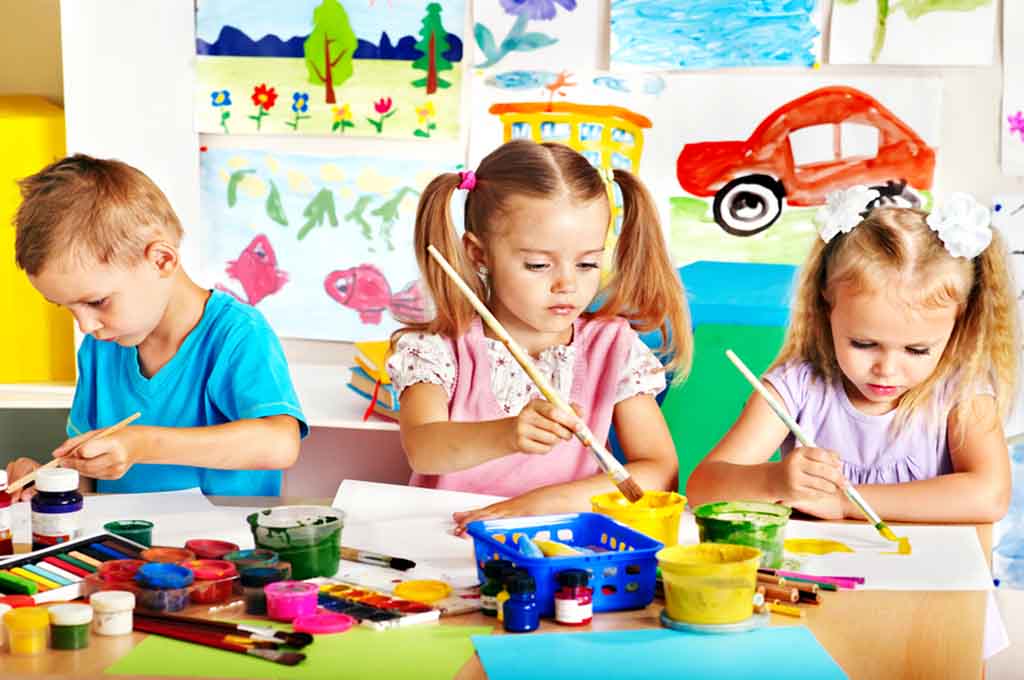
Preschoolers want to articulate themselves and their thoughts through art using paints, crayons, colours, clay, play dough, glue, and paper. Your child may still need assistance using scissors, sticky tape or thin pencils. They will generally start creating simple shapes and enjoy experimenting with form, space and colours in artworks.

For example, preschoolers frequently draw houses and gardens with the sun shining brightly in the sky. This is because the picture consists of simple shapes like circles, squares and triangles. Craft projects also help your child make choices for themselves. For example, should the sky be blue or white etc?

The Music and Learning and Development Connection

Preschoolers like to experiment with musical instruments, along with their voices, to convey emotions and thoughts. Your child will love to sing and may do so for the sake of it, and they love predictable music, simple melodies and tunes.

They may listen to popular music, voice their lines, and phrases and words will generally come from things and people around them. Your preschooler will typically remember, identify and sing favourite songs. Singing children children understand the distinctions between quick, medium, long, short, noisy and quiet tunes and melodies.

How Dance Lets Children Learn and Develop

Music and dance teach your toddler physical and communication skills. Your preschooler will run rapidly or gradually or make up acts and dance movements while listening to their favourite music and tunes. They may also convey sorrow, pleasure, joy, or anticipation by action. E.g., your child may angrily stomp around the room or leap in joy.

You may see your child soaring like a butterfly, creeping around like a caterpillar, leaping like a frog. Such gestures make them understand the world better. You could encourage this by giving them various props. They could wave around a sheet to pretend they are sailing etc.

As you can see, there is a strong link between creative mediums and learning in children. If you want to know more about creativity and the arts for preschoolers at Clovel Childcare and Early Learning Centres, don’t hesitate to get in touch with us. Just give us a call at 02 9199 0294 or via this contact us form.

Thanks for reading,
Clovel Childcare
1300 863 986
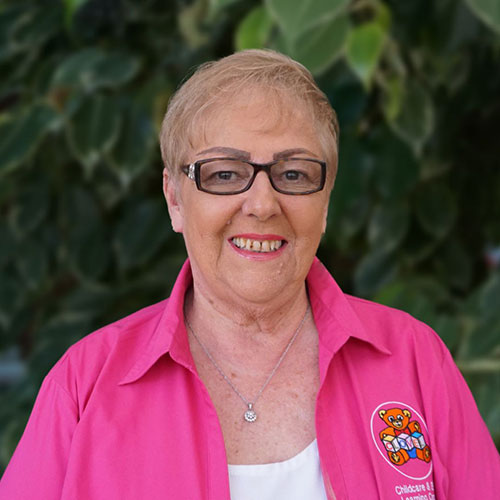
Lyn Connolly
Founder and Company Director

Lyn Connolly is the Founder and Company Director of Clovel Childcare & Early Learning Centres, a family‑owned group of eight centres across Western Sydney established from her first service at Merrylands. Active in early childhood education since 1977, she also serves as President of the Australian Childcare Alliance (ACA) NSW, representing providers in state and federal consultations, media, and public hearings.

Still Have Some Questions?