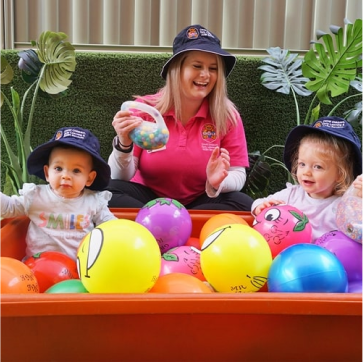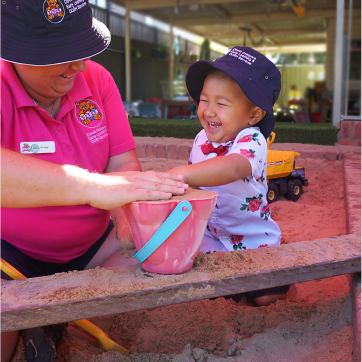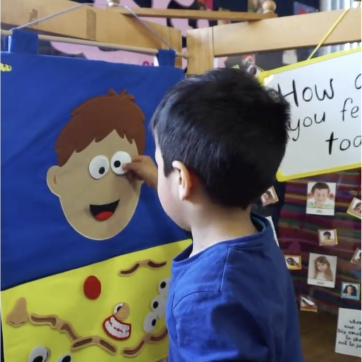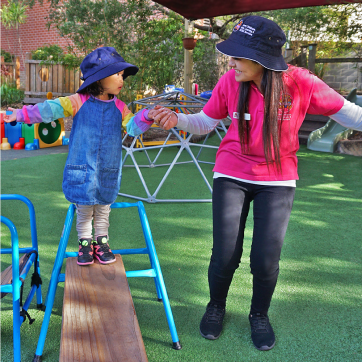

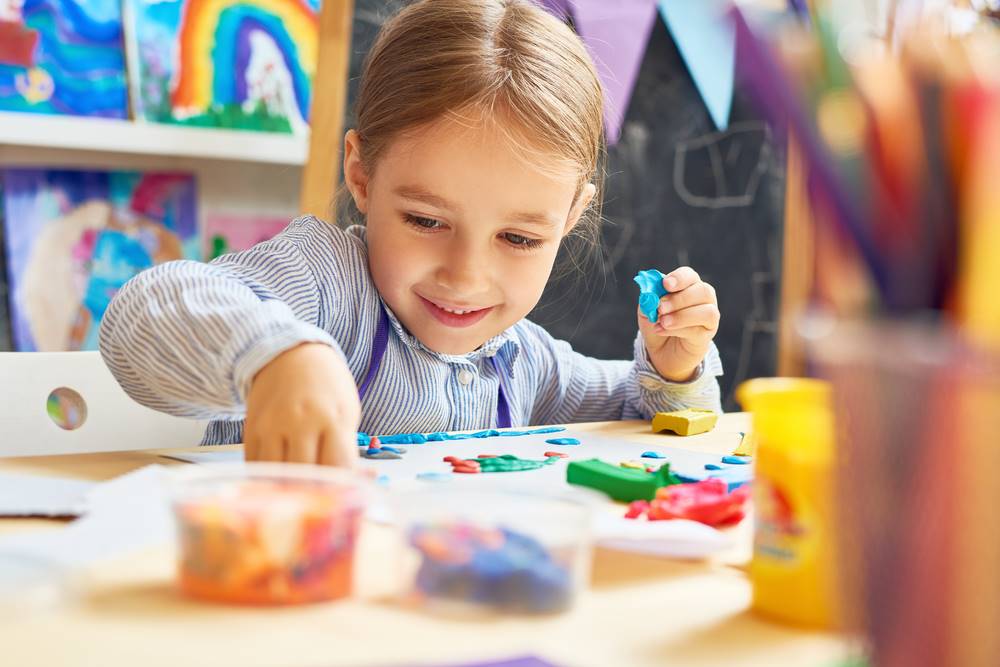


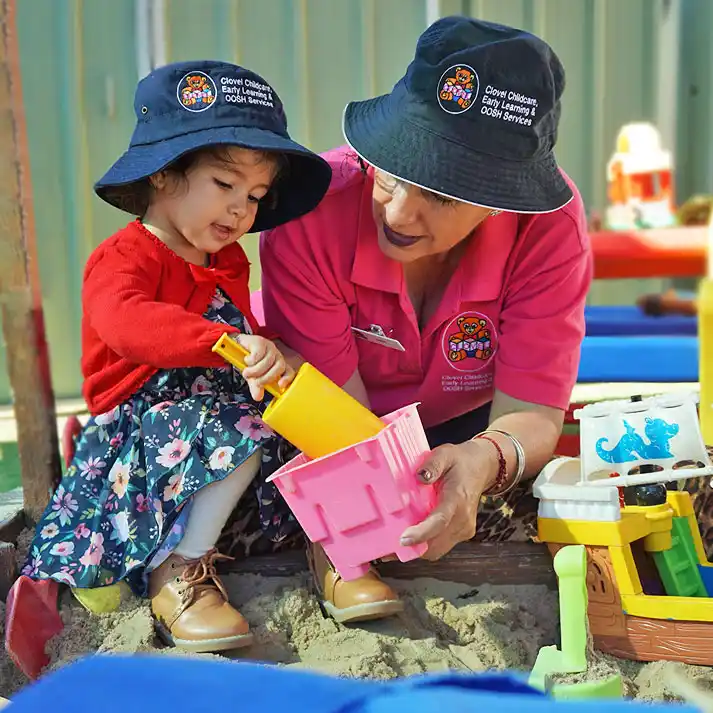
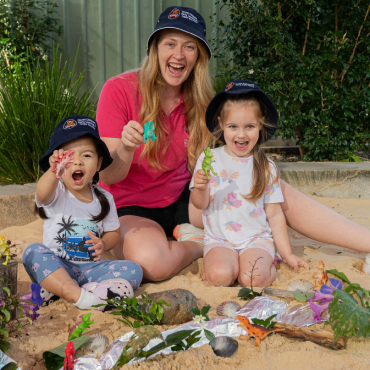
For children, there’s something undeniably intriguing about crafting. Perhaps it’s the novelty of creating something new from every day, household items. It could be the satisfaction that comes from completing a task. Regardless, crafting is not only good for a child’s imagination, but it is also a valuable tool in improving their development.
Working on a craft project gives children the chance to improve their fine motor skills. Cutting paper with scissors, coloring, gluing, and drawing all work the finer muscles in the hands and wrists which, in turn, helps prepare children for writing.
Crafting also strengthens a child’s problem-solving skills and their vocabulary as they practice naming different animals, shapes, and colors.
Best of all, craft projects afford children the opportunity to be creative, to think outside the box, and to bring their imaginings to life. Given all the benefits that come from crafting, we thought we’d share some of our favorite craft projects that you can do with your little learner.
Craftikit
We can’t say enough good things about this ingenious crafting kit. Inside you’ll find everything you need to create 20 unique craft projects. Each comes packaged in its own envelope with easy-to-follow instructions. While you may enjoy crafting alongside your child, know that many of the projects are easy enough for older preschoolers to complete on their own, allowing parents and caregivers to make dinner, fold laundry, or just enjoy a few moments of rest while your child is occupied.
Letter of the Week Printable Activity
Learning letters has never been more fun! Parents can download 24 printable craft activities (one for every letter of the alphabet) for $10. Print them on colorful construction paper and let your little one go to town cutting, coloring, and gluing.
This activity is wonderful for developing fine motor skills and alphabet recognition.
Cardboard Tube Penguins
Did you know the smallest penguin in the world is only 30cm tall? You can share all kinds of interesting penguin facts with your child while making these sweet birds from items you likely have in your home at this very moment.
This activity will likely require some supervision as painting is involved, but it also provides plenty of opportunities for parents and caregivers to answer questions about these unique and amazing birds!
Sticker Name Game
This is one of those ridiculously easy and wildly entertaining activities that will have you thinking now why didn’t I think of that!
Children LOVE seeing their own names written on a larger-than-life piece of poster board or construction paper. Simply write your child’s name is big block letters, then give your child colorful sticker dots and have them trace their name in dots.
This activity is satisfying for children and helps them develop hand-eye coordination and letter recognition. They can also let their creative juices flow as they decide which color dots to use.
Colorful Macaroni Necklace
This creative craft will appeal to junior scientists everywhere as children dye dried macaroni noodles before stringing them together to make fun and funky wearable jewelry!
The concept used when dying eggs is used here, but it’s pasta taking a dyed vinegar bath instead of eggs. Once the pasta is dry, children can slide the pasta onto a string and create necklaces and bracelets.
This activity teaches the concept of cause and effect, problem solving, and predicting as well as hand/eye coordination.
DIY Moon Sand
Moon sand is a magical material with the moldable properties of wet sand, yet it easily brushes off hands with little to no cleanup required after play. It is a preschool teacher’s dream come true! While moon sand can be purchased at educational stores or online, why pay for something you can easily make for free?
Believe it or not, only two ingredients are required to make moon sand—regular baking flour and baby oil (consider food coloring a third ingredient if you’d like to dye your moon sand vibrant colors…and who wouldn’t want to do that?).
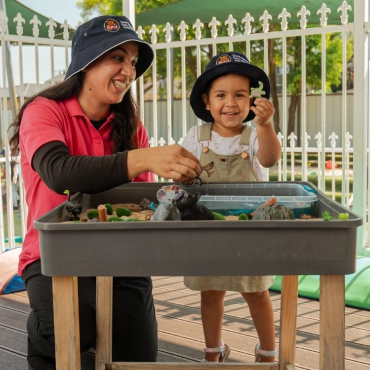
Use Moon sand outdoors or in a sand/water table to contain the mess. Moon sand can be scooped into cups and turned over to build a moon sandcastle. Children can bring action figures to the table and create landscapes perfect for imaginative play. While this is one of the messier crafts on our lists, we just know you and your children are going to love playing with this magical sand.
The benefits of crafting cannot be understated. Providing children with plenty of crafting opportunities allows them to develop the skills and problem-solving strategies that will serve them well throughout their grade school careers. We hope this list has provided you with inspiration to create a crafting corner in your home. You provide the supplies, children supply the imagination, and magic is the result.
Thanks for reading,
Clovel Childcare
1300 863 986