


Blog & Videos

math skills for pre-schoolers

Why Math Skills Are Important For Pre-Schoolers

If you have heard that the rules around mobile phones and electronic devices in early childhood settings have changed, you are right. If your child attends a childcare centre in NSW, these changes are already in effect.

Here is a plain-English breakdown of what changed, why it happened, and what it means for your family.

Why Did the Laws Change?

The changes were introduced as a child safety measure. In 2025, Australia’s Education Ministers agreed to amend the Education and Care Services National Law to address concerns about the potential for personal devices to be used to capture, store, or transmit images of children in care without authorisation.

The intent is straightforward: children in early learning settings deserve an environment where their privacy and safety are actively protected.

What Changed Nationally

From 27 February 2026, amendments to the national Education and Care Services National Law took effect across Australia. Under these changes, educators and staff who work directly with children are restricted from using personal electronic devices in care settings.

Before this, from 1 September 2025, all early childhood education and care services nationwide were required to have written policies in place addressing the use of digital devices.

What Changed in NSW

NSW moved ahead of the national timeline. The Education and Care Services (Supply, Authorisation and Use of Devices) Order 2025 took effect on 6 November 2025, applying across NSW’s 6,000 or more early learning services, including long day care centres, preschools, and family day care.

Under this order, educators and staff must use service-issued or service-authorised devices rather than their own personal devices when working directly with children.

What Counts as a Personal Device?

The definition is broad. A personal device is any device owned by an individual (not the approved provider) that is capable of capturing, storing, or transmitting an image. This includes:

  • Mobile phones
    Smartwatches
  • Cameras and tablets
    iPads and laptops
  • Hard drives, USB drives, and memory cards
  • Wearables such as camera glasses

Who Does the Ban Apply To?

The restrictions apply to anyone working directly with children at a service, including permanent and casual educators, students on placement, volunteers, contractors, and allied health professionals delivering programs on-site.

Parents, carers, and other visitors are not covered by the ban. In NSW, parents and carers remain free to use their personal devices during drop-off, pick-up, centre visits, and events involving their own children. There are also authorised exceptions for essential purposes, including emergencies and health or disability support needs.

What About Screen Time for Children?

These new laws specifically address staff device use, not children’s screen time. Screen time limits for young children are not mandated within childcare regulation at a national level.

The relevant guidance comes from the federal Department of Health and Aged Care’s 24-Hour Movement Guidelines, which recommend no screen time for children under 2 years, and no more than 1 hour per day for children aged 2 to 5 years. These are health guidelines, not regulatory requirements.

What This Means for Your Family

If your child attends a childcare centre in NSW, their service is already required to operate under these rules. Any educator or staff member working directly with your child should not be using a personal device to take photos or videos. Only service-authorised devices should be used for that purpose.

If you have questions about how your centre handles digital devices or image capture, you are well within your rights to ask. Most services will have a written policy in place that covers exactly this.

At Clovel, the safety and wellbeing of every child in our care is at the heart of everything we do. If you would like to know more about how we support your child across our centres, we would love to have that conversation with you.

Math skills taught during preschool education are specifically designed to provide children the solid foundation they require to succeed in elementary school and later in their life as well. It’s important that educators craft lessons around various basic skills that become the stepping stones to advanced math in high school and in college too. Setting a base for life skills in later life should start from preschool.

Math Skills For Pre-schoolers

Pre-schoolers should be introduced to simple mathematical concepts. When they are taught basic terminology at that young age, it helps them apply math concepts in a better way in a classroom setting. Since the children already have an understanding of the concepts, elementary teachers can then focus on helping the students apply those ideas.

While pre-schoolers might not yet be entirely ready to learn various math skills, they can gain some idea of the concepts through practice and language. Some basic math skills the children can develop include:

#1 Number Sense

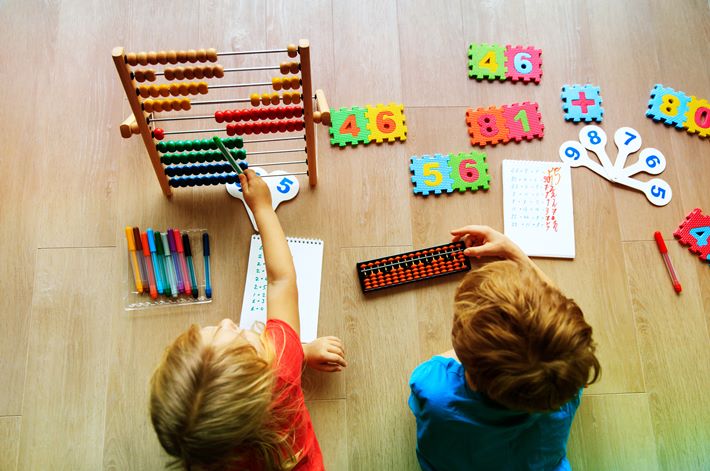
This involves number basics and is the main math skill children need to develop before moving into kindergarten. They need to learn how to count forwards & backwards very early in childhood. This becomes the base for them to learn the relationships between numbers when they move into higher grades.

Number sense is a crucial skill that preschool educators should focus on teaching the children before they reach kindergarten. This focus on number sense helps children develop a better understanding of advanced calculations and math concepts.

#2 Learning Numbers Via Pictures Or Representation

Children have an innate ability to be naturally visual and can build relationships between represented item and numbers. Using pictures/representation to clarify certain relationships is making the use of mathematics real to the child’s mind. It’s why preschool education should focus on representing numbers using pictures, family members, and items.

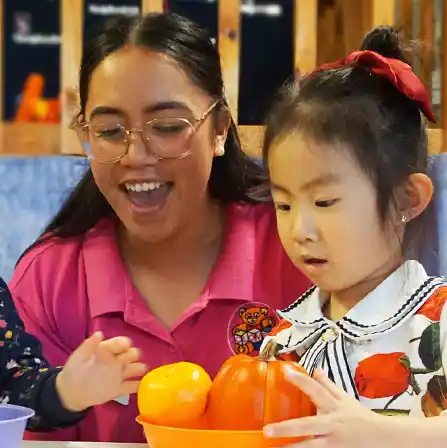
For example, educators can use pictures of different fruits to help pre-schoolers learn math basics. This helps them make quicker connections between math skills and the real world, which play a pivotal role in academic success. If they aren’t able to make this connection, it can leave them confused about the things they are learning in the classroom.

#3 Addition And Subtraction

While it’s important that children should learn concepts well before learning skills, teachers can start with basics such as addition and subtraction before the children move to higher grades. These skills will be used constantly in standard childhood interactions. When teachers focus on the basics, they would be able to create stronger math skills foundation for the children’s future.

Preschool teachers can use various examples which surface during play activities to teach children the concepts of addition and subtraction. This is the time teachers can teach skills without actually creating any specific advanced lesson plans that might prove to be too advanced for childhood knowledge and literacy.

#4 Preschool Math Concepts Become The Building Blocks For Higher Education

All the basic math skills that teachers provide to pre-schoolers become the building blocks for the student’s academic career. When children learn simple skills such as math concepts, number sense, and application of ideas like simple addition, they are better prepared to move into further education. Fortunately, children of that age can learn at an amazing rate, and preschool teachers can apply math skills and concepts to normal activities for children.

If you want to know more about math activities for pre-schoolers at Clovel Childcare and Early Learning Centres, don’t hesitate to get in touch with us. Just give us a call at 1300 863 986 or fill in this contact us form.

Thanks for reading,
Clovel Childcare
1300 863 986
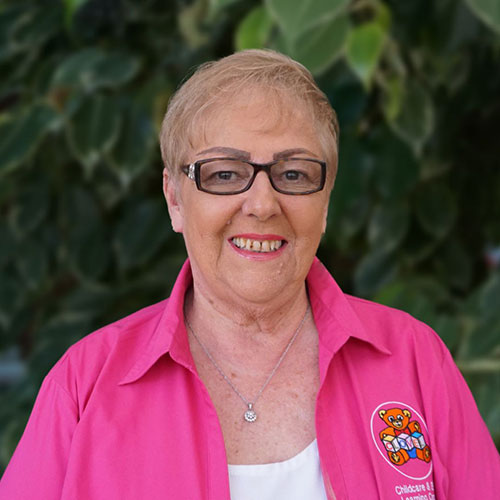
Lyn Connolly
Founder and Company Director

Lyn Connolly is the Founder and Company Director of Clovel Childcare & Early Learning Centres, a family‑owned group of eight centres across Western Sydney established from her first service at Merrylands. Active in early childhood education since 1977, she also serves as President of the Australian Childcare Alliance (ACA) NSW, representing providers in state and federal consultations, media, and public hearings.

Still Have Some Questions?