
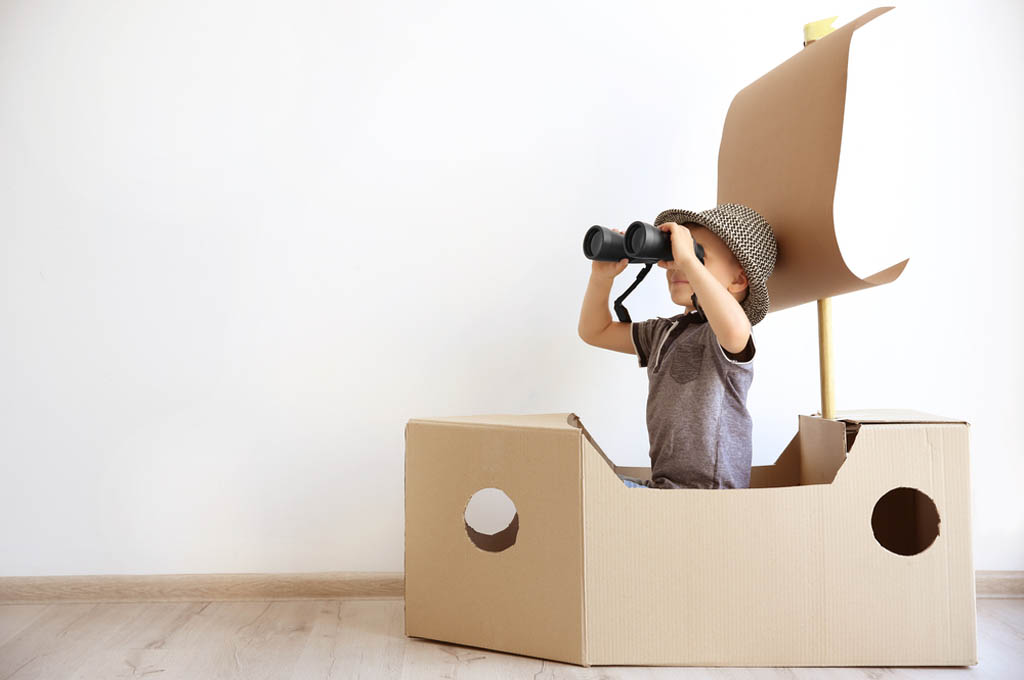

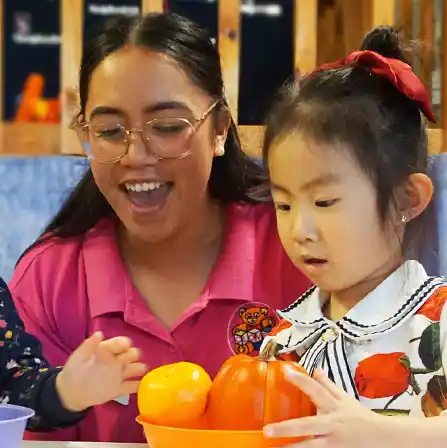
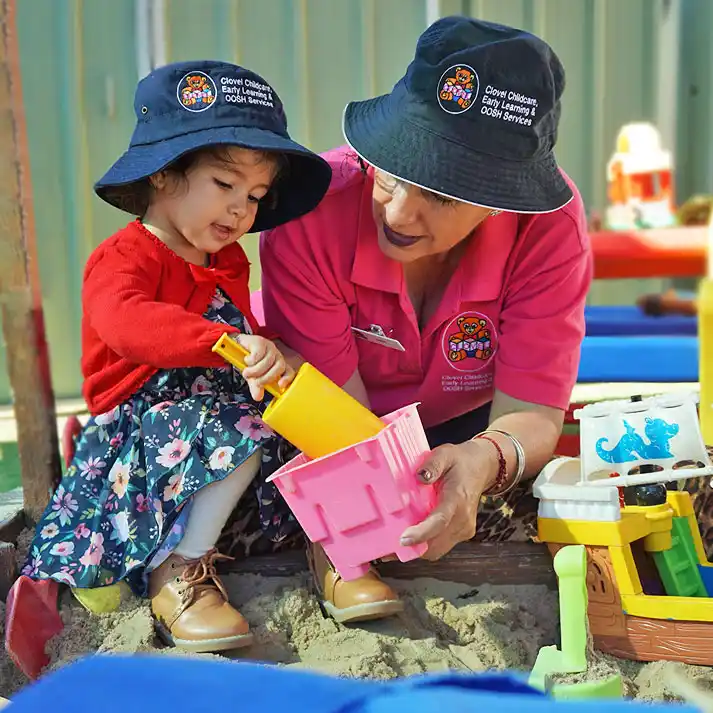
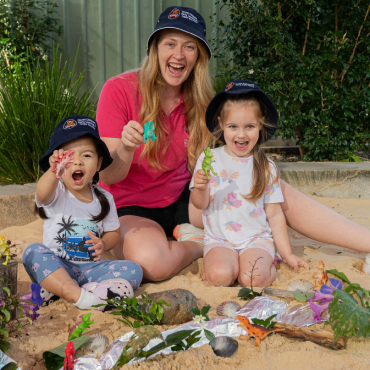
Children have creative capacities we can hardly imagine. Like a painter, they visualise something different than a common eye catches. For example, if you give them a cardboard box, one child will build a house while another will transform it into an aeroplane or rocket. Where did the original box disappear? You might not realise it, but this is where you can see the idea of “loose parts” play at work.
The term “loose parts” appeared in an article, “How NOT to Cheat Children – The Theory of Loose Parts” (1971) by the landscape architect Simon Nicholson. According to Nicholson, the extent of inventiveness and creativity are directly related to the number of variables in a given environment.
Essentially, loose parts empower creativity in children as they get the chance to experiment and explore. Nicholson’s theory has been influenced by playschool designers, architects, and early childhood educators.
Understanding What Loose Parts Are
Loose parts can be synthetic or natural. These materials have no particular direction, can be used as they are or in combination with other things. Being highly adaptable, they can be used in multiple ways by:
- Combining
- Lining up
- Carrying or moving
- Redesigning
- Taking apart
- Assembling them in any way
Some people consider loose parts as rubbish. You can collect or buy them from various places like nature around you, recycling bins in homes, craft, or charity stores, and these materials are inexpensive. If you begin to list them, you can fill pages. Look at the following list:
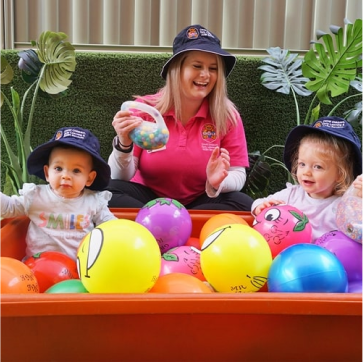
- Objects – boxes, buckets, broken toys, blocks, balls, trays, washing basket
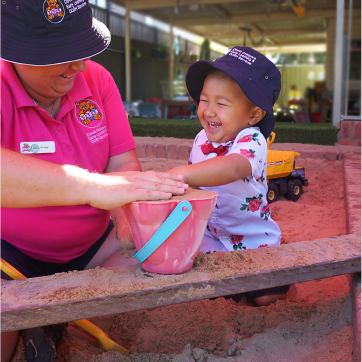
- Natural resources – leaves, stones, sticks, feathers, conch shells, etc.
- Materials – paper, beads, ribbon, fabric, cushions, chalk, pom-poms
Where Can You Add Loose Parts?
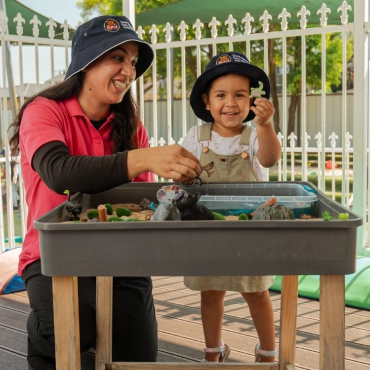
You can find loose parts for children’s activities in the home or from outside the home. Children often collect items of household use or from the recycling bin. You can add some things from nature along with coloured pencils, crayons, paper, and scatter them around in your children’s play area.
Leave it to the children to decide how to use these loose parts. The children’s age should be kept in mind while collecting items. It is the responsibility of the educator to ensure an abundance of loose parts and to maintain them.
Sometimes, a child may play with the parts alone, while at times, they may engage in a group and collaborative play. The educator needs to take care that a child doesn’t play with items that create a risky situation. Just as it is important for a child to get opportunities to face challenges and learn about injury risk, the educator needs to do the risk assessment first.
The Freedom to Learn
Loose play means the freedom to create and adapt. There are no fixed goals, no traditional play structures like slides and jungle gems, and no specific guidance. When the children interact with loose parts, they enter an unknown world, not knowing the outcome of their actions. It ignites their thinking, which helps them in theoretical reasoning and problem solving later on. Here are five learning outcomes of loose play the book talks about:
- Math skills – While handling loose parts like caps and beads, the children keep sorting, combining, classifying, and separating them to build a structure in their mind. Once the loose parts are a part of their games, we see them counting as well as organising them into patterns, sequences, groups, and even by colour and type.
- Physical Science Learning – Playing with loose parts encourages children to explore, learn about physical worlds around them, and build ideas. For example, when they stack things like bottles, boxes, and tubes, they develop a more in-depth understanding of how things work and why they do not work.
- Literacy & Language – Language development naturally occurs while playing with loose parts, when children tell peers and adults how they manipulate the parts. They not only engage in conversations but also tell stories about how they do it and in the process, use new words, complex sentences, and argue, which helps the development of thinking skills.
- Art and Creativity – Adding loose parts to the art area is an invitation to the children to make a collage, draw, paint, and sculpt. It enhances their idea spectrum, tests their creativity, and questioning power.
- Music & Movement – Loose parts such as ribbons, hoops, scarves have great movement possibilities. Children can improvise the movements. If you expose them to a musical play, you will have a festival of sounds as they explore by hitting different items and the sounds they produce from chaotic, noisy to soft and gentle.
Various research studies focus on the benefits of engaging children in loose parts play. Almost every child is thrilled when they see a mound of loose parts in their play area and instinctively creates amazingly creative things from them. They enjoy every moment learning something new without the need for any guidance.
We at Clovel Childcare and Early Learning Centre, provide a very nurturing environment for children to learn and grow. For any information about our services, give us a call at 02 9199 0294 or fill in this contact us form
Thanks for reading,
Clovel Childcare
1300 863 986