

Blog & Videos

seasonal STEM activities

4 Seasonal STEM Activities to Keep Your Preschooler Busy Over the Holidays

If you have heard that the rules around mobile phones and electronic devices in early childhood settings have changed, you are right. If your child attends a childcare centre in NSW, these changes are already in effect.

Here is a plain-English breakdown of what changed, why it happened, and what it means for your family.

Why Did the Laws Change?

The changes were introduced as a child safety measure. In 2025, Australia’s Education Ministers agreed to amend the Education and Care Services National Law to address concerns about the potential for personal devices to be used to capture, store, or transmit images of children in care without authorisation.

The intent is straightforward: children in early learning settings deserve an environment where their privacy and safety are actively protected.

What Changed Nationally

From 27 February 2026, amendments to the national Education and Care Services National Law took effect across Australia. Under these changes, educators and staff who work directly with children are restricted from using personal electronic devices in care settings.

Before this, from 1 September 2025, all early childhood education and care services nationwide were required to have written policies in place addressing the use of digital devices.

What Changed in NSW

NSW moved ahead of the national timeline. The Education and Care Services (Supply, Authorisation and Use of Devices) Order 2025 took effect on 6 November 2025, applying across NSW’s 6,000 or more early learning services, including long day care centres, preschools, and family day care.

Under this order, educators and staff must use service-issued or service-authorised devices rather than their own personal devices when working directly with children.

What Counts as a Personal Device?

The definition is broad. A personal device is any device owned by an individual (not the approved provider) that is capable of capturing, storing, or transmitting an image. This includes:

  • Mobile phones
    Smartwatches
  • Cameras and tablets
    iPads and laptops
  • Hard drives, USB drives, and memory cards
  • Wearables such as camera glasses

Who Does the Ban Apply To?

The restrictions apply to anyone working directly with children at a service, including permanent and casual educators, students on placement, volunteers, contractors, and allied health professionals delivering programs on-site.

Parents, carers, and other visitors are not covered by the ban. In NSW, parents and carers remain free to use their personal devices during drop-off, pick-up, centre visits, and events involving their own children. There are also authorised exceptions for essential purposes, including emergencies and health or disability support needs.

What About Screen Time for Children?

These new laws specifically address staff device use, not children’s screen time. Screen time limits for young children are not mandated within childcare regulation at a national level.

The relevant guidance comes from the federal Department of Health and Aged Care’s 24-Hour Movement Guidelines, which recommend no screen time for children under 2 years, and no more than 1 hour per day for children aged 2 to 5 years. These are health guidelines, not regulatory requirements.

What This Means for Your Family

If your child attends a childcare centre in NSW, their service is already required to operate under these rules. Any educator or staff member working directly with your child should not be using a personal device to take photos or videos. Only service-authorised devices should be used for that purpose.

If you have questions about how your centre handles digital devices or image capture, you are well within your rights to ask. Most services will have a written policy in place that covers exactly this.

At Clovel, the safety and wellbeing of every child in our care is at the heart of everything we do. If you would like to know more about how we support your child across our centres, we would love to have that conversation with you.

The holiday season is upon us and even though moms, dads, and caregivers are busy prepping for parties and gift-giving, children often find themselves bored due to the lack of structure in their days.

To help bust through the boredom blues, we’ve gathered 4 activities that we think your preschooler will love. And the best part? Every activity promotes STEM learning…but your child will be having so much fun they won’t even realise they’re getting smarter!

But before we start, some of you may be wondering what STEM means?

STEM is an acronym for Science, Technology, Engineering, and Math. STEM activities can address a single aspect (like science) or can combine two or more competencies (like science and math).

For preschool-aged children (those around four and five years old), STEM concepts are explored by getting curious as to how things work and why they happen. Solving problems, asking questions, and exploring their world are integral parts of STEM activities for young learners.

Seasonal STEM Activities

Frozen Pom Pom Sensory Bin

Sensory bins are a wonderful learning tool and easy to make at home. (In fact, we love them so much we will be devoting an entire upcoming blog to the benefits of sensory bin play and offering plenty of bin-making suggestions…so stay tuned!)

For this activity, created by Happy Toddler Playtime, all you need are pompoms in varying sizes and holiday colors, a plastic bin that will fit in your freezer, and a few simple tools.

Place fully soaked pompoms into the bin and allow them to freeze. While a few of the upper pompoms will be out of the water, those on the bottom will be frozen in ice. Place the bin on the floor and give your child simple tools like a paintbrush and a squirt bottle filled with warm water and let them work to free the pompoms from the ice. Let them get curious and decide which tool works best for melting/removing the ice. This activity will keep littles entertained for hours…or until the ice melts!

Flying Reindeer Activity

This activity is perfect if you live somewhere with cold winters and need something to entertain children that doesn’t involve going outdoors.

You probably have most of the supplies already on hand. All you need is some string, a cardboard paper roll, a balloon, and a few craft supplies to create a reindeer. Tape the string to the walls and follow the directions to create your reindeer. Your child will then use the balloon to launch their deer across the room in the most dramatic fashion!

While this activity is a perfect example of Newton’s 3rd law of motion, that explanation may go over the heads of preschoolers. But they will see for their own eyes that air rushing out of the balloon in one direction forces their reindeer in the opposite direction, giving them a better understanding of how things work in their world.

Christmas Tree Slime

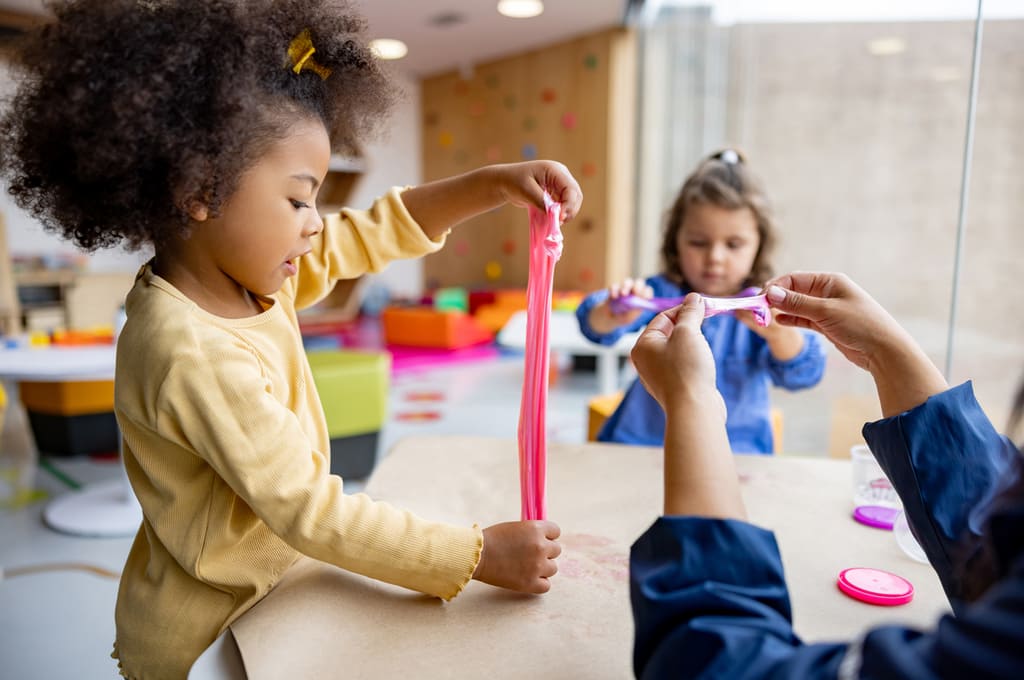
If there’s one thing every preschooler loves, it’s slime. So why not entertain them with a holiday version that is sparkly and so much fun to make?

For this activity, whip up a batch of homemade slime according to the recipe, then craft a Christmas-tree-shaped cone from a paper plate. Place a blob of slime at the top of your cone allowing it to creep down and create your slime tree. Children can then decorate their tree with beads, plastic gems, and anything else you have on hand.

This is a great activity for asking questions…What will happen when we put the slime on the cone? Will it move quickly or slowly? Will the ornaments stay in place or slide down the tree?…and getting preschoolers comfortable with the concept of creating a hypothesis during an experiment.

Reindeer Toothpaste

This activity may be a bit messy, but children find it positively magical, and it just might become a holiday tradition.

Using hydrogen peroxide, dry yeast, and glitter, you can create a chemical reaction that transforms a few ingredients into mounds of foamy, glittery “toothpaste”. We love the suggestion made in the original post to add a few drops of peppermint oil to the ingredients to create wintry-scented “toothpaste”.

Here’s a hint: Be sure to reinforce to children that this is not actual toothpaste and should not be placed in the mouth. You could even call it something else to reduce any temptation to taste it.

And there you have it—four festive activities that are sure to keep your little learner entertained and in the holiday spirit.

From all of us at Clovel Childcare, we wish you and yours a very happy holiday season!
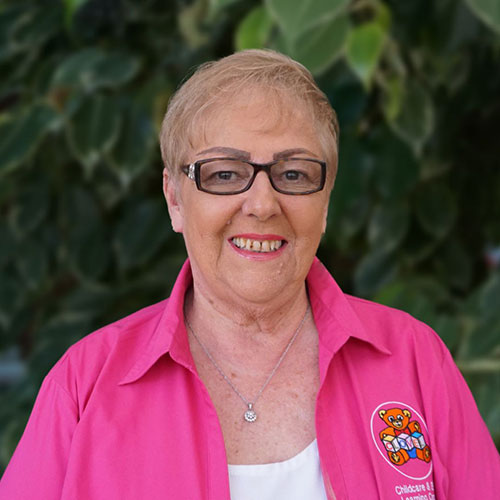
Lyn Connolly
Founder and Company Director

Lyn Connolly is the Founder and Company Director of Clovel Childcare & Early Learning Centres, a family‑owned group of eight centres across Western Sydney established from her first service at Merrylands. Active in early childhood education since 1977, she also serves as President of the Australian Childcare Alliance (ACA) NSW, representing providers in state and federal consultations, media, and public hearings.

Still Have Some Questions?