


Blog & Videos

number games your preschooler will love

Here Are Our 5 Favorite Number Games Your Preschooler Will Love

If you have heard that the rules around mobile phones and electronic devices in early childhood settings have changed, you are right. If your child attends a childcare centre in NSW, these changes are already in effect.

Here is a plain-English breakdown of what changed, why it happened, and what it means for your family.

Why Did the Laws Change?

The changes were introduced as a child safety measure. In 2025, Australia’s Education Ministers agreed to amend the Education and Care Services National Law to address concerns about the potential for personal devices to be used to capture, store, or transmit images of children in care without authorisation.

The intent is straightforward: children in early learning settings deserve an environment where their privacy and safety are actively protected.

What Changed Nationally

From 27 February 2026, amendments to the national Education and Care Services National Law took effect across Australia. Under these changes, educators and staff who work directly with children are restricted from using personal electronic devices in care settings.

Before this, from 1 September 2025, all early childhood education and care services nationwide were required to have written policies in place addressing the use of digital devices.

What Changed in NSW

NSW moved ahead of the national timeline. The Education and Care Services (Supply, Authorisation and Use of Devices) Order 2025 took effect on 6 November 2025, applying across NSW’s 6,000 or more early learning services, including long day care centres, preschools, and family day care.

Under this order, educators and staff must use service-issued or service-authorised devices rather than their own personal devices when working directly with children.

What Counts as a Personal Device?

The definition is broad. A personal device is any device owned by an individual (not the approved provider) that is capable of capturing, storing, or transmitting an image. This includes:

  • Mobile phones
    Smartwatches
  • Cameras and tablets
    iPads and laptops
  • Hard drives, USB drives, and memory cards
  • Wearables such as camera glasses

Who Does the Ban Apply To?

The restrictions apply to anyone working directly with children at a service, including permanent and casual educators, students on placement, volunteers, contractors, and allied health professionals delivering programs on-site.

Parents, carers, and other visitors are not covered by the ban. In NSW, parents and carers remain free to use their personal devices during drop-off, pick-up, centre visits, and events involving their own children. There are also authorised exceptions for essential purposes, including emergencies and health or disability support needs.

What About Screen Time for Children?

These new laws specifically address staff device use, not children’s screen time. Screen time limits for young children are not mandated within childcare regulation at a national level.

The relevant guidance comes from the federal Department of Health and Aged Care’s 24-Hour Movement Guidelines, which recommend no screen time for children under 2 years, and no more than 1 hour per day for children aged 2 to 5 years. These are health guidelines, not regulatory requirements.

What This Means for Your Family

If your child attends a childcare centre in NSW, their service is already required to operate under these rules. Any educator or staff member working directly with your child should not be using a personal device to take photos or videos. Only service-authorised devices should be used for that purpose.

If you have questions about how your centre handles digital devices or image capture, you are well within your rights to ask. Most services will have a written policy in place that covers exactly this.

At Clovel, the safety and wellbeing of every child in our care is at the heart of everything we do. If you would like to know more about how we support your child across our centres, we would love to have that conversation with you.

As adults, it is easy to forget about the important role of play in developing preschoolers. It is through play that young learners begin to make sense of the world around them. As they play, children learn the basics of scientific inquiry (predicting what might happen and comparing the prediction to results), language development, and mathematical principles.

Today, we’re going to focus on incorporating numeracy play in a way that encourages children to enjoy math with hands-on fun!

To that end, we’ve gathered a list of our 5 favorite number games and activities you can play with your child. And trust us when we say, they’ll have so much fun they won’t even realise how much they are learning!

Number Bubbles

This is a fun, interactive activity that helps children improve basic number recognition, and the only equipment you need is a box of sidewalk chalk and a concrete driveway or sidewalk.

Draw several large circles on the sidewalk and write a number inside each bubble. If you are playing with multiple children, you’ll want to be sure you have enough number sets for each child. So, for example, if you have three children playing, you’ll want to have three sets of bubbles numbered 1 – 10. Be sure to mix the numbers up and spread the bubbles out as much as possible.

Once all the bubbles and numbers have been drawn, gather the children and call out a random number. The children must find the circle containing that number and stand in it. You’ll get extra “fun” points if you have liquid bubbles on hand to blow over the children as they search for their numbers.

Connect the Dot Sheets

Connect the dots pages are a classic activity that children absolutely love! If you aren’t familiar, each sheet has a partially finished drawing. Your child will draw a line using a pencil or crayon from number 1 to number 2 and so on until they have completed the drawing.

While you can buy connect-the-dot booklets at your local education supply store or online (we love this book for preschoolers!), there are plenty of free, downloadable worksheets to be found online. The crafty geniuses over at the Spruce Crafts have a variety of worksheets you can print for free at varying skill levels.

Number Scavenger Hunts

Scavenger hunts are a great way to strengthen number identification skills while getting the wiggles out. And the best part about scavenger hunts is they can be coordinated at a local park, in your neighborhood, or indoors in the event of inclement weather.

For this activity, simply write down a set of numbers and ask your child to find that number somewhere out in the world. It could be on a street sign, an address marker, in a book, or on a clock.

To increase the difficulty, you could create a picture list and ask children to bring you a certain number of items (1 teddy bear, 2 spoons, 3 blocks, etc.).

Counting Bears Set

If you’re looking for an activity offering the most bang for your buck, consider investing in a counting bears set. Children find them wildly entertaining, and you’ll enjoy the fact that this is one of those rare toys that grow with your child.

Begin by using the quantity cards to help your child practice basic counting. As your child grows, he or she can use the set for sorting and learning basic addition and subtraction skills.

But, once again, there’s no reason to buy an official set. You can create the same experience at home by writing numbers on note cards and asking your child to collect that number of any item they choose. They can then sort the items according to size, texture, color, or any other category you can come up with.

Cookie Jar Matchup Game

Here’s another fun game that helps hone number identification and matching skills. You can download the templates for this game here. We love this set because children can play using the numbers or the spelled-out numbers for a bit more of a challenge.

Give your child one of the cookie jars and a set of cookies (also included in the download). Your child will then count the chips on each cookie and place the cookie on the corresponding number. You can even write the number and the spelled-out name on the back of the cookies so children can flip them over and see if they matched the cookies up correctly.

Number play should be every bit as fun as any other type of play for your preschooler, and we think these games will provide the perfect way to get your child to associate numbers and counting with playtime and fun!

Thanks for reading,
Clovel Childcare
1300 863 986
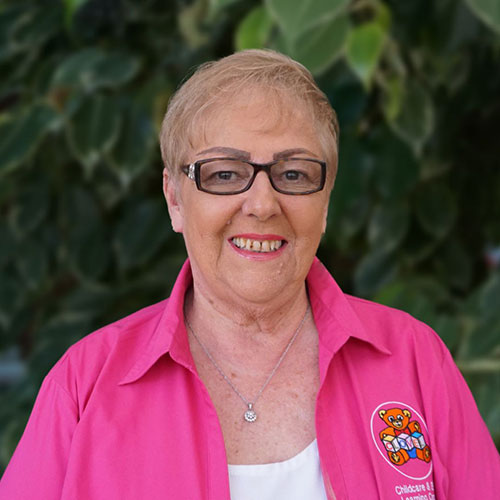
Lyn Connolly
Founder and Company Director

Lyn Connolly is the Founder and Company Director of Clovel Childcare & Early Learning Centres, a family‑owned group of eight centres across Western Sydney established from her first service at Merrylands. Active in early childhood education since 1977, she also serves as President of the Australian Childcare Alliance (ACA) NSW, representing providers in state and federal consultations, media, and public hearings.

Still Have Some Questions?