

Building blocks is one of the best educational toys for toddlers that develops multiple skills in a child. It’s a great way to stimulate learning in various domains such as intellectual, physical, language, social-emotional and development.
There is substantial research indicating that playing with Building Blocks is crucial for future cognitive success in the learning of numbers and math. Researchers have proved that children that are exposed to block play during early childhood (ages three, four and five years) tend to perform better in Algebra and other math subjects in middle school.
Why Building Blocks and how do they help?
When it comes to block play in infants and toddlers, there is a natural progression that occurs, and here we take a look at it:
Toddlers
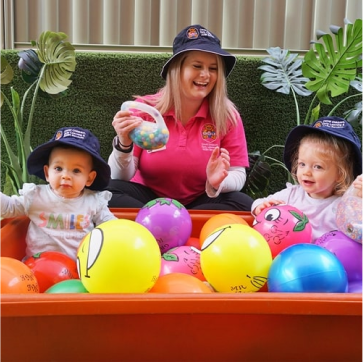
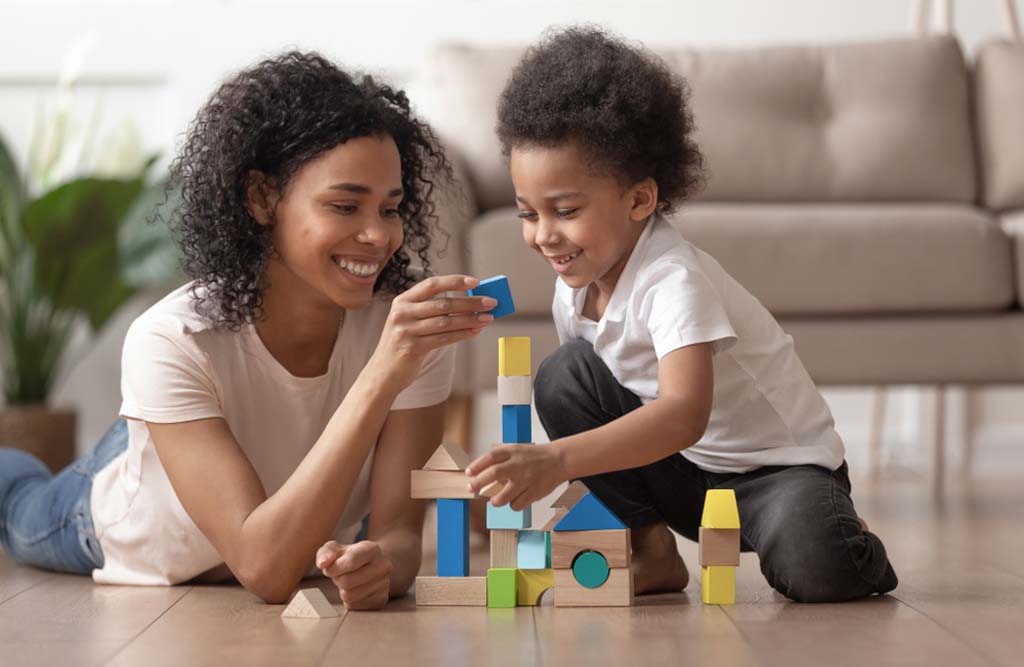
When a toddler is introduced to blocks, there is a lot of learning involved; they learn how heavy they are, what their shape and feel is and how to hold on to them. The bright colours entice them, and that can keep them engaged for long periods in of time. They will also start carrying the blocks around and experiment with them by banging them together and judge how they sound when dropped to the floor.
It doesn’t take very long for toddlers to learn the effect of stacking, knocking, dumping and filling or laying blocks on the floor in different forms. During this play, they also learn concepts such as the order of objects, comparing objects by creating exact matches and learning sizes. There are social benefits too. Playing with blocks contributes significantly to helping them develop self-confidence.
For instance, when they build any structure with the blocks and stack them successfully, they feel a distinct sense of accomplishment which increases their self-confidence and makes them feel proud. When playing with blocks, young children are also expanding their receptive and expressive language because they are also learning different words such as “tall”, “short”, “ stack”, “ build”, “ pick up”, “ dump”, “ fill” etc.
Three-Year-olds
By the age of three, block play begins to look very different to children. They start progressing in their play, and it gets more constructive. Three-year-olds generally play near other children or alone, and they also begin engaging in pretend play by this age.
They begin building enclosures that look like castles, roads, farm pens and zoos. They learn various concepts such as counting, ordering and sorting, shape, size as well as one-to-one correspondence.
Four & Five-Year-olds
Children in this age group are more structured, organised, balanced, coordinated, developed and experienced in their block play. Constructive play is more exploratory and open-ended. Children start building more complex and combined structures. From a social standpoint, four & five-year-olds start to cooperate with their peers, share ideas and start building blocks with others.
Sometimes, they also include different types of block accessories, including animals, people and vehicles while engaging in pretend or imaginary play. They even begin to learn concepts such as sequencing, classifying, patterns, and fractions; and their problem-solving and design building skills significantly improve.
When children are involved in block play, it allows them to improve their conceptual understanding as they automatically explore forces such as tension, compression, gravity, aesthetic sensibility, stability as well as the relationship between materials while achieving successful design.
Preschoolers start exploring and noticing more 3D objects like prisms, cubes, cylinders and cones and that’s all part of geometry. Children begin to learn science through block play when they start experimenting, comparing and making predictions with balance, stability and cause an effect. It expands their understanding of words like” through”, ” top”, ” bottom”, “off”, ” over”, ” under” and other spatial relations.
Children Learn the Fun Way
It’s important to mould children minds when they are young. It is at this age that their minds are like sponges and they learn and absorb different concepts. This is why block play is something parents and educators should encourage from an early age.
At Clovel, we are always in-sync with the latest trends in learning for preschoolers and include block play and other activities regularly so that the children have a well-rounded learning experience. It’s an excellent way to help them build confidence and learn various skills through play.
For any more information, call Clovel Childcare and Early Learning Centre, don’t hesitate to get in touch with us. For any information about our Educational Programs, give us a call at 02 9199 0294 or fill in this contact us form.
Thanks for reading,
Clovel Childcare
1300 863 986