






Would you remember the numerous hours spent as a child during the summer holidays bent over lined notebooks? Tracing letters and words and fine tuning the master craft of writing beautiful letters? Chances are this whiff of nostalgia that swept into your minds would have brought a peculiar tug at the strings of your heart.
Some of you might be excessively proud of your ability to write in beautiful handwriting. At the same time, some would hold nightmares of their language teachers peering at them from the top of their spectacles, shaking their heads at the inability to write impeccably. No matter which category you belong to, in the digital age today, you would be hard-pressed to recollect the last time you put pen to paper to write.
The Digital Era
In this era with us quickly moving on from the typewriter to computers, the world has been on fast-forward mode evolving faster than we can keep up. Computers came in first and what followed was a deluge of handheld devices that restricted our usage of the pen and paper. But this new situation has created an unusual problem for our current generation.
The digital natives as they are called, have now grown so accustomed to the digital devices that they find themselves handicapped without them. But is handwriting crucial for children in a digital age? Well the jury is still out on that. But the number of researches that have happened in this field is throwing quite a few alarming results.
Not taking anything away from devices, children have a kind of autonomy that was never there for all the previous generations. We followed a set pattern through our childhood of learning cursive writing and developing what can be termed as “penmanship”
Children of today, on the contrary, are typing, swiping, clicking way before they are writing, drawing, among other things. This trend spells doom for not just the fine art of writing by hand, but for cursive writing (which is on the wane). It also means lesser cognitive development in children as compared to the same age children of yesteryears.
Some Facts
Tech-savvy children of today are more comfortable holding devices, swiping and typing their way to glory only to fumble and stumble while holding a pen or pencil. But is this lack of writing skills worrisome? Yes. Writing skills are directly linked to the development of our cognitive abilities. That means we develop far better reading skills and thought processing skills than someone who isn’t adept at writing.
It has also been proven that writing is directly proportional to the development of our learning and remembering skills. Children who have exhibited better writing skills have been known to have excellent hand-eye coordination as well as for performing well in academics in elementary school and further studies. Children were found to be able to express themselves through writing better and exhibited superior brain activity when it came to the creative arts.
Now comes the scary part. Children with a lack of writing skills are known to struggle and suffer from more stress connected with the quantity of written work. Use of informal language and the possibility to copy was found to be high in such students. Those who are not trained to sit and write correctly from an early age tend to face several physical problems towards the latter part of their lives.
What Can We Do To Rectify This Problem?
It is in our hands (forgive the pun) to help our young children master the art of writing, starting at an early age and helping them develop their handwriting skills. Allowing the freedom to doodle and scribble freely can be quite the motivation for those children who are attempting to write for the very first time. Even before letters are introduced, these children can be helped to understand and reproduce simple shapes and other elements.
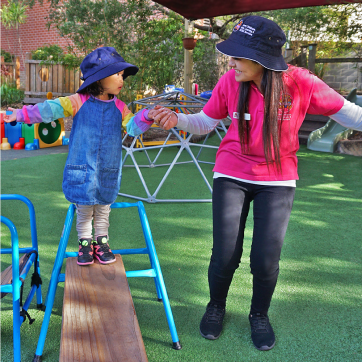
Asking them to trace what you have already drawn for them can provide them with the much-needed motivation often found lacking. Doing other activities outside can help your child develop better hand-eye coordination during the writing process. Let them develop the right posture while writing and also focus on building their muscle groups that ramp up motor skills in children.
We are not suggesting that you deprive your child of digital media entirely. But keeping track of their usage pattern and talking to them, playing with them and also reading to them can help jump-start the process of handwriting in young children. The success of our children might be just wrapped up in this quaint art.
We at Clovel Childcare and Early Learning Centre, provide a very nurturing environment for children to learn and grow. For any information about our services, give us a call at 02 9199 0294 or fill in this contact us form
Thanks for reading,
Clovel Childcare
1300 863 986