




Blog & Videos

child development

Understanding What Child Development And The Related Milestones Are

If you have heard that the rules around mobile phones and electronic devices in early childhood settings have changed, you are right. If your child attends a childcare centre in NSW, these changes are already in effect.

Here is a plain-English breakdown of what changed, why it happened, and what it means for your family.

Why Did the Laws Change?

The changes were introduced as a child safety measure. In 2025, Australia’s Education Ministers agreed to amend the Education and Care Services National Law to address concerns about the potential for personal devices to be used to capture, store, or transmit images of children in care without authorisation.

The intent is straightforward: children in early learning settings deserve an environment where their privacy and safety are actively protected.

What Changed Nationally

From 27 February 2026, amendments to the national Education and Care Services National Law took effect across Australia. Under these changes, educators and staff who work directly with children are restricted from using personal electronic devices in care settings.

Before this, from 1 September 2025, all early childhood education and care services nationwide were required to have written policies in place addressing the use of digital devices.

What Changed in NSW

NSW moved ahead of the national timeline. The Education and Care Services (Supply, Authorisation and Use of Devices) Order 2025 took effect on 6 November 2025, applying across NSW’s 6,000 or more early learning services, including long day care centres, preschools, and family day care.

Under this order, educators and staff must use service-issued or service-authorised devices rather than their own personal devices when working directly with children.

What Counts as a Personal Device?

The definition is broad. A personal device is any device owned by an individual (not the approved provider) that is capable of capturing, storing, or transmitting an image. This includes:

  • Mobile phones
    Smartwatches
  • Cameras and tablets
    iPads and laptops
  • Hard drives, USB drives, and memory cards
  • Wearables such as camera glasses

Who Does the Ban Apply To?

The restrictions apply to anyone working directly with children at a service, including permanent and casual educators, students on placement, volunteers, contractors, and allied health professionals delivering programs on-site.

Parents, carers, and other visitors are not covered by the ban. In NSW, parents and carers remain free to use their personal devices during drop-off, pick-up, centre visits, and events involving their own children. There are also authorised exceptions for essential purposes, including emergencies and health or disability support needs.

What About Screen Time for Children?

These new laws specifically address staff device use, not children’s screen time. Screen time limits for young children are not mandated within childcare regulation at a national level.

The relevant guidance comes from the federal Department of Health and Aged Care’s 24-Hour Movement Guidelines, which recommend no screen time for children under 2 years, and no more than 1 hour per day for children aged 2 to 5 years. These are health guidelines, not regulatory requirements.

What This Means for Your Family

If your child attends a childcare centre in NSW, their service is already required to operate under these rules. Any educator or staff member working directly with your child should not be using a personal device to take photos or videos. Only service-authorised devices should be used for that purpose.

If you have questions about how your centre handles digital devices or image capture, you are well within your rights to ask. Most services will have a written policy in place that covers exactly this.

At Clovel, the safety and wellbeing of every child in our care is at the heart of everything we do. If you would like to know more about how we support your child across our centres, we would love to have that conversation with you.

Child development is the formative period during which a child’s physical, cognitive, emotional, and social abilities develop. This period continues until early adulthood. The child passes through various developmental milestones in sequential periods and progresses from dependence on parents/guardians to increased independence. Children develop various skills in five primary areas of development:

5 Primary Areas Of Development

1. Language & Speech Development

By twelve months, children begin to utter some words. They understand the language and able to say it. By two years, as their word power increases, they name the things around including some parts of their body- they may learn to say things like nose, mouth, eyes, etc. And between three to five years of age, they say most of the words correctly and string correct sentences.

2. Emotional and Social Development

A child’s interaction with the world around starts quite early. For instance, a six-month-old baby smiling at you is interaction. When they give a flying kiss, they are interacting and so too when they play games in kindergarten. The level of interaction and their understanding increases with age.

3. Cognitive Development

Cognitive skills relate to the ability to learn, understand, remember, solve problems, think, etc. When your child asks you “why,” when you ask her to do something, she is using her cognitive ability.

4. Development of Gross Motor Skills

When a child uses a group of large muscles, to sit, walk, run, balance, he is developing gross motor skills.

5. Development of Fine Motor Skills

A child is using her fine motor skills when she uses her hands or a spoon to eat, draw, dress, play, write, and do many other things. She used her group of small muscles to pull a chair, holding a pencil, or play with toys.

About Developmental Milestones

A pediatrician uses developmental milestones to decide how a child is doing. A developmental milestone is a set of functional skills that most children have in a specific age range. Learning to walk is one such major milestone which is achieved between the ages of 8 to 15 months, and it differs from child to child. It is also sequential, meaning a child develops a new skill after reaching an earlier milestone that works as a building block for the next one. Generally, you observe that a child does not walk before learning to crawl, hold something, and stand.

A child’s brain develops rapidly between the ages of 1 to 5, and the growth continues after that. The cognitive skills of a child improve during this period, and she learns to think, problem-solve, explore, analyse, and learn new skills. Milestones are for you to know how your child learns and grows at a certain age, given the broad time-frame to learn different skills.

Factors that Matter

Most parents are anxious about how their children will succeed during adolescence and adulthood. Research studies identify two factors that determine the growth and success trajectory of your child.

  • Genes – This is considered a crucial factor and often referred to as “it is in the genes.” It is the baggage of genetic material received from parents at the time of conception. Genes determine the traits and characteristics the child will have. For example, a child’s eyes, complexion are a part of genetic inheritance. However, the new science of epigenetics shows that genetic activity can be controlled by environmental signals and our perception of these signals.
  • Environment – This is a key factor that affects the universe of a child’s experiences while interacting at home, school, and playgrounds, etc. A nurturing environment helps the child to be more sociable in thinking and action and vice versa.


We at Clovel Childcare and Early Learning Centres, provide a very nurturing environment for children to learn and grow. For any information about our services, give us a call at 02 9199 0294 or fill in this contact us form

Thanks for reading,
Clovel Childcare
1300 863 986
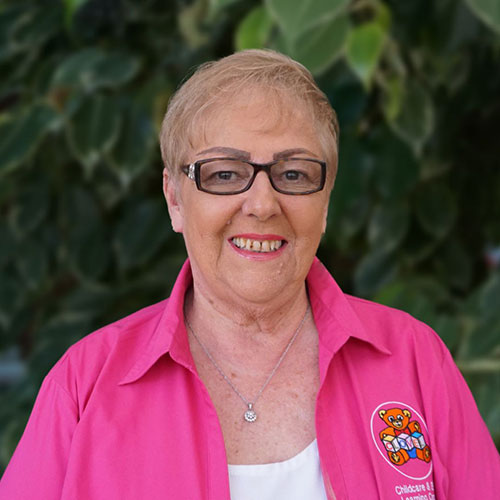
Lyn Connolly
Founder and Company Director

Lyn Connolly is the Founder and Company Director of Clovel Childcare & Early Learning Centres, a family‑owned group of eight centres across Western Sydney established from her first service at Merrylands. Active in early childhood education since 1977, she also serves as President of the Australian Childcare Alliance (ACA) NSW, representing providers in state and federal consultations, media, and public hearings.

Still Have Some Questions?