



Blog & Videos

aspects that shape the development of your child

Aspects That Shape The Development Of Your Child

If you have heard that the rules around mobile phones and electronic devices in early childhood settings have changed, you are right. If your child attends a childcare centre in NSW, these changes are already in effect.

Here is a plain-English breakdown of what changed, why it happened, and what it means for your family.

Why Did the Laws Change?

The changes were introduced as a child safety measure. In 2025, Australia’s Education Ministers agreed to amend the Education and Care Services National Law to address concerns about the potential for personal devices to be used to capture, store, or transmit images of children in care without authorisation.

The intent is straightforward: children in early learning settings deserve an environment where their privacy and safety are actively protected.

What Changed Nationally

From 27 February 2026, amendments to the national Education and Care Services National Law took effect across Australia. Under these changes, educators and staff who work directly with children are restricted from using personal electronic devices in care settings.

Before this, from 1 September 2025, all early childhood education and care services nationwide were required to have written policies in place addressing the use of digital devices.

What Changed in NSW

NSW moved ahead of the national timeline. The Education and Care Services (Supply, Authorisation and Use of Devices) Order 2025 took effect on 6 November 2025, applying across NSW’s 6,000 or more early learning services, including long day care centres, preschools, and family day care.

Under this order, educators and staff must use service-issued or service-authorised devices rather than their own personal devices when working directly with children.

What Counts as a Personal Device?

The definition is broad. A personal device is any device owned by an individual (not the approved provider) that is capable of capturing, storing, or transmitting an image. This includes:

  • Mobile phones
    Smartwatches
  • Cameras and tablets
    iPads and laptops
  • Hard drives, USB drives, and memory cards
  • Wearables such as camera glasses

Who Does the Ban Apply To?

The restrictions apply to anyone working directly with children at a service, including permanent and casual educators, students on placement, volunteers, contractors, and allied health professionals delivering programs on-site.

Parents, carers, and other visitors are not covered by the ban. In NSW, parents and carers remain free to use their personal devices during drop-off, pick-up, centre visits, and events involving their own children. There are also authorised exceptions for essential purposes, including emergencies and health or disability support needs.

What About Screen Time for Children?

These new laws specifically address staff device use, not children’s screen time. Screen time limits for young children are not mandated within childcare regulation at a national level.

The relevant guidance comes from the federal Department of Health and Aged Care’s 24-Hour Movement Guidelines, which recommend no screen time for children under 2 years, and no more than 1 hour per day for children aged 2 to 5 years. These are health guidelines, not regulatory requirements.

What This Means for Your Family

If your child attends a childcare centre in NSW, their service is already required to operate under these rules. Any educator or staff member working directly with your child should not be using a personal device to take photos or videos. Only service-authorised devices should be used for that purpose.

If you have questions about how your centre handles digital devices or image capture, you are well within your rights to ask. Most services will have a written policy in place that covers exactly this.

At Clovel, the safety and wellbeing of every child in our care is at the heart of everything we do. If you would like to know more about how we support your child across our centres, we would love to have that conversation with you.

Your child’s growth needs to include various aspects of their life. While physical growth is a vital and visible aspect, the development of other facets such as emotional, social, intellectual, behavioural responses and communication skills are equally important, all of which are interdependent and influence each other. Here we take a look at what they are:

Relationships Are the Bedrock of a Child’s Development

Relationships of all types are at the heart of a child’s development at various stages of life. Brick by brick, they build the child’s experiences of the world around them and teach them to understand it. They act like a mirror through which a child begins to look at the world and form a better understanding of things.

Children, in general, are very perceptive. They learn by observing how individuals behave with each other. From a close distance, they notice how you and your partner behave with each other. This learning often works as a starting point of your child’s behaviour, social and other skills.

Your child’s relationship with you is at the centre of all other relationships. Other associations with family members, friends, caretakers, educators, too play a crucial role.

A loving and close bond between you and your child result in mutual learning about each other and helps to build a bridge of understanding. A growing child’s needs develop and change. You need to understand those needs and learn how to fulfill them.

Play Is Important Too

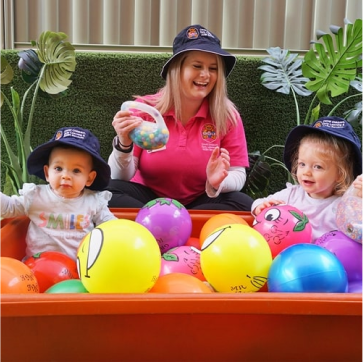
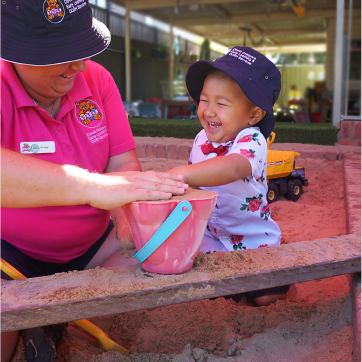
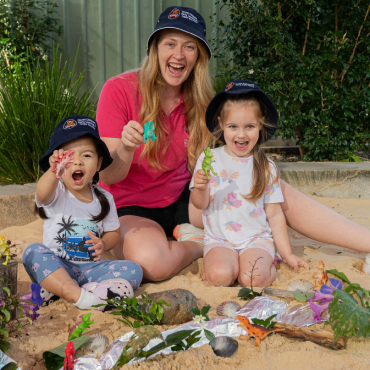
In early childhood, your child learns through the medium of play. For her, play is a fun activity to experiment, explore, observe, make mistakes and naturally solve problems. Your encouragement, as well as support, play a vital role at this stage. You must let go of the support at the right moment to enable her to learn through her mistakes as well. This is the time for them to learn by negotiating with the world around them. Your role is to help your child learn the necessary skills for life, like communicating, socialising with children and people around, thinking, helping others, moving, solving problems etc. You can achieve this by spending a lot of time playing, interacting, listening and talking to them.

Other Things that Matter

Some other factors influence your child’s development. While their genes are closely linked to their well-being, other significant aspects include physical activity, healthy eating, general health and their immediate environment.

1. Nourishing Food

A child needs nourishing foods to grow and develop well. Their sense of taste develops during this period too. If you lay the foundation of healthy eating habits in your child while they are very young, it becomes intrinsic to their nature. Let your child see you preparing healthy meals. When they sit with family and share this good food, they adopt healthy eating habits.

2. Health is The Base

Your child’s good health is central to their overall development. Every child suffers from colds and coughs, stomach ache and earache at some time or the other, but these are minor ailments that vanish with the right treatment. However, if your child suffers from any chronic illness, you must consult the paediatrician. These medical experts can diagnose the condition that affects your child’s growth. They will educate you about the appropriate treatment to help your child enjoy normal health.

3. Physical Activity

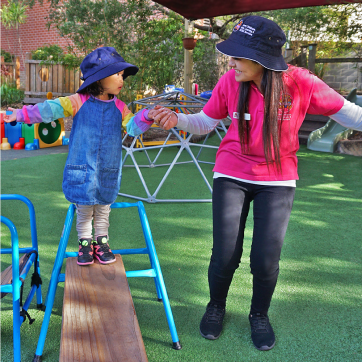
Physically active children keep themselves engaged in some activities all the time. These movements improve their motor skills, encourage them to think and navigate the world around. An active child always seeks some reason to move. However, you must provide a lot of opportunities for physical activity, inside as well as outside your home. Generally, if parents are active, a child will follow their example.

4. A Good Neighbourhood

Your child grows in the company of children and people in your neighbourhood. They learn from their friends and neighbours and are influenced by them significantly. Various places such as shops, parks, schools, libraries, health centres etc. that your child visits impact their learning and development process.

We at Clovel Childcare and Early Learning Centre, provide a very nurturing environment for children to learn and grow. For any information about our services, give us a call at 02 9199 0294 or fill in this contact us form

Thanks for reading,
Clovel Childcare
1300 863 986
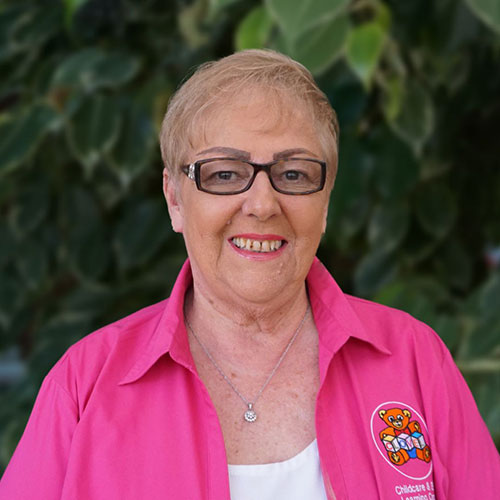
Lyn Connolly
Founder and Company Director

Lyn Connolly is the Founder and Company Director of Clovel Childcare & Early Learning Centres, a family‑owned group of eight centres across Western Sydney established from her first service at Merrylands. Active in early childhood education since 1977, she also serves as President of the Australian Childcare Alliance (ACA) NSW, representing providers in state and federal consultations, media, and public hearings.

Still Have Some Questions?