
Children run, climb, balance, build and test what their bodies can do. Those experiences are an important part of learning, but they can also lead to the occasional bump, graze or fall. For parents, receiving a call that their child has been hurt can still be worrying, even when the injury is minor.
So, what happens if a child gets injured at childcare? The exact response depends on the injury and the service’s procedures, but the priorities are always the same: make the area safe, assess and comfort the child, provide appropriate first aid, contact the family, document what happened and arrange further medical help when needed.
Here is a clear look at what families can generally expect from an early childhood education and care service in NSW.


An educator’s first step is to respond to the child and prevent any further harm. That may mean moving other children away, removing a damaged item or asking another educator to supervise the group while the child receives attention.
The educator will then assess what has happened and how the child is responding. For a small graze, this may involve cleaning the area, applying first aid and offering reassurance. If the injury may be more serious, the service will follow its emergency procedures and seek medical assistance promptly.
Comfort matters too. A young child may be frightened or upset even when an injury is minor. Calm words, a familiar educator and age-appropriate reassurance help the child feel safe while their condition is checked and monitored.
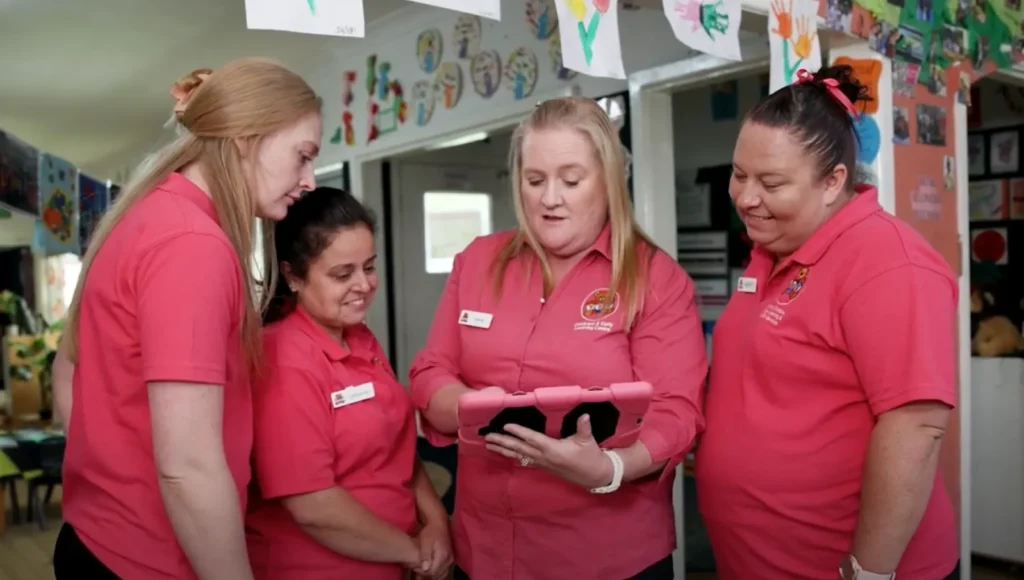
Centre-based childcare services must ensure that appropriately qualified people are in attendance and immediately available in accordance with the National Regulations. Services also maintain first aid kits that are suitably equipped, easily recognised and readily accessible to adults while remaining inaccessible to children. All Clovel Educators are fully trained in First Aid, Asthma, Anaphylaxis and CPR.
The first aid provided will depend on the situation and the child’s known health information. If a child has a medical condition, allergy or risk of anaphylaxis, educators follow the relevant medical management and risk minimisation plans held by the service.
Parents should not have to discover an injury without an explanation. Under Regulation 86 of the Education and Care Services National Regulations, a parent must be notified as soon as practicable, and no later than 24 hours after their child is involved in an incident, injury, trauma or illness while receiving care.
How quickly and how directly a service contacts you will depend on the circumstances. All incidents a parent will be contacted to inform them, even if it is minor. An incident report will be completed and signed by the parent/guardian on pick up.
If the service cannot reach a parent, it may contact an authorised nominee or emergency contact listed in the child’s enrolment record. This is one reason families should keep phone numbers, emergency contacts and medical information up to date.
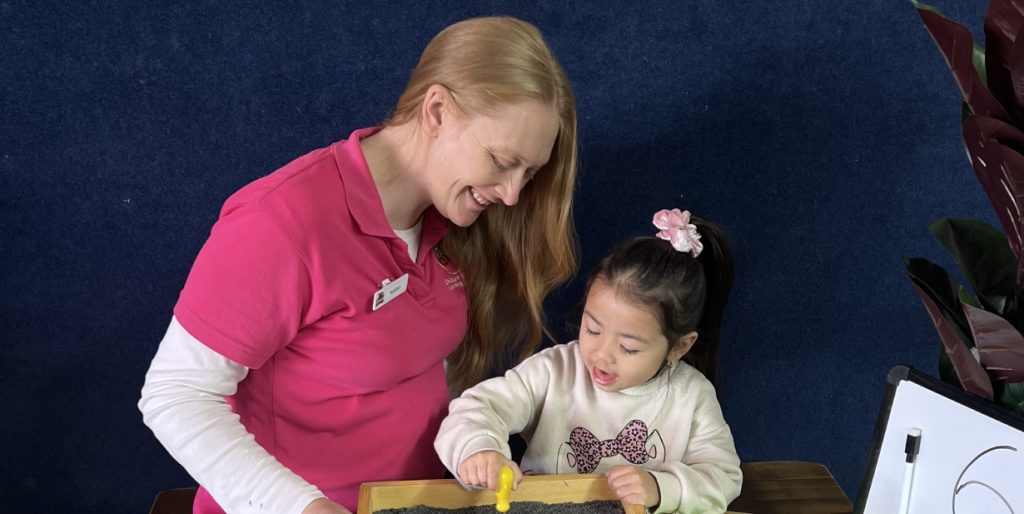
If educators believe the child needs urgent medical attention, they will follow the service’s emergency procedure. This may include calling an ambulance, contacting the parent immediately and continuing first aid until help arrives. A child may leave the service for ambulance, medical or hospital care when this is required.
Under the National Regulations, a serious incident includes an injury or trauma for which a reasonable person would consider urgent medical attention necessary, or for which the child attended or should reasonably have attended hospital. It also includes certain serious illnesses and emergencies attended by emergency services.
Approved providers must notify the relevant regulatory authority about a serious incident within 24 hours. This regulatory notification is separate from the service’s communication with the family.
The service must keep an incident, injury, trauma and illness record. It is more than a note saying that a child fell. The record should capture the information needed to explain the event and the response, including:
The information must be entered as soon as practicable and within 24 hours. These records are confidential. Families may be asked to read and sign the report to acknowledge that they have been informed. A signature does not prevent a parent from asking questions or raising a concern about what occurred.
Good incident management does not end when first aid is complete. Educators may continue observing the child for changes in behaviour, pain, swelling or other symptoms. At collection, the family should be told what happened, how the child responded and whether there are signs to monitor at home.
The centre should also consider whether anything needs to change. Educators might review the environment, equipment, supervision arrangements or the way an activity was set up. The aim is to identify a preventable hazard without removing every worthwhile challenge from children’s play.
This distinction matters. Quality early learning environments support age-appropriate risk-taking, such as climbing, balancing and testing physical skills, while educators actively assess hazards and provide suitable supervision. A scraped knee does not automatically mean the environment was unsafe, but every incident is an opportunity to check and learn.
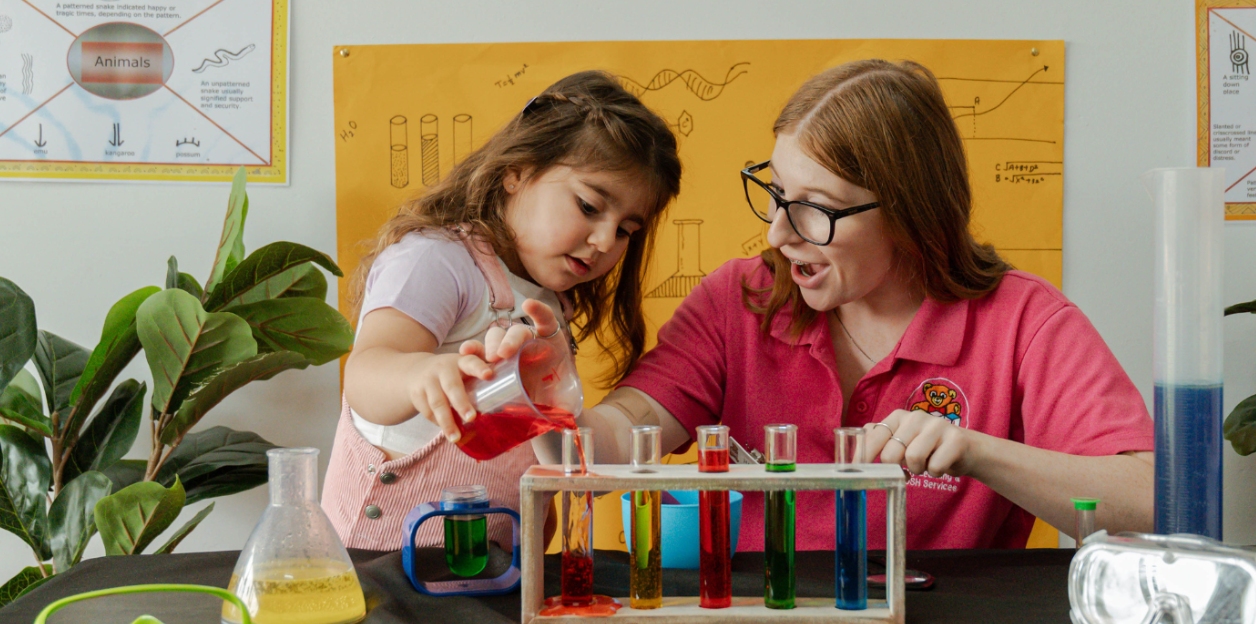
Start by asking for a straightforward account of what happened. Useful questions include where the incident occurred, who saw it, what first aid was given, how your child behaved afterwards and whether educators have noticed any new symptoms.
Follow any medical advice provided by a qualified health professional. If your child develops concerning or worsening symptoms after leaving care, seek appropriate medical assistance. In an emergency, call Triple Zero (000). This article provides general information and is not a substitute for medical advice.
You can also tell the service about any changes you observe at home. This helps educators support the child when they return and adds useful context to the centre’s review of the event.
It is reasonable to ask questions, especially if the explanation is unclear, the injury was significant or you were not informed promptly. Begin with the child’s educator or Nominated Supervisor and explain what you need clarified. Ask to see the service’s incident, injury, trauma and illness policy and discuss the relevant incident record.
Most concerns can be addressed through a calm, factual conversation. If you remain worried, follow the service’s complaints process. Families can also seek information from the relevant state regulatory authority about early childhood education and care requirements.
No active childhood can be completely free from minor accidents. A responsible childcare centre reduces avoidable harm through supervision, maintained equipment, safe environments, risk assessments, hygiene procedures, first aid readiness and clear emergency plans.
Educators also teach safety in practical ways. Children learn to wait for space on climbing equipment, carry tools carefully, recognise boundaries and ask for help. These everyday lessons build judgement and confidence that children carry beyond the centre.
When a child is injured at childcare, families deserve timely information and a clear account of the response. Educators should act promptly, provide appropriate care, document the incident and review what can be learned from it.
At Clovel Childcare, children’s health, safety and wellbeing guide the way we plan our environments and care for every child. If you would like to ask about our procedures or see how a Clovel centre supports children day to day, contact our team or book a tour.
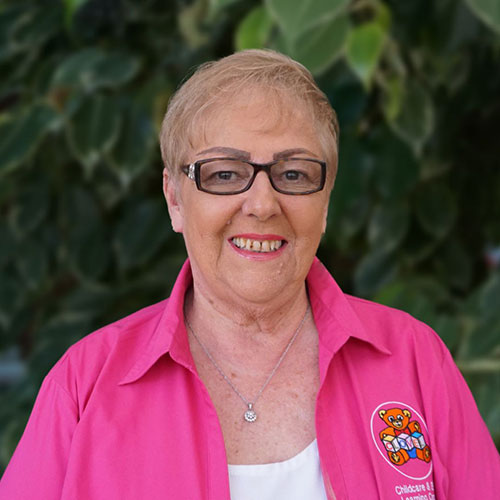
Lyn Connolly is the Founder and Company Director of Clovel Childcare & Early Learning Centres, a family‑owned group of eight centres across Western Sydney established from her first service at Merrylands. Active in early childhood education since 1977, she also serves as President of the Australian Childcare Alliance (ACA) NSW, representing providers in state and federal consultations, media, and public hearings.

Parents must be notified as soon as practicable and within 24 hours when their child is involved in an incident, injury, trauma or illness while at the service. The way the service contacts you may reflect how urgent the situation is.
No. Many childhood injuries are minor and can be managed with first aid and observation. Emergency medical help is sought when the child’s condition or the circumstances indicate it is needed.
The service must create and keep a record containing prescribed details. Families are commonly asked to review and sign the record as part of the notification process.
The child’s parent or carer must be notified, and the approved provider must also notify the relevant regulatory authority within the required timeframe.
Choosing your child’s childcare and early learning centre is one of the biggest decisions you will ever have to make for your child. If you have more questions for us or would like to book a tour of one of our centres, please fill out our form and we’ll be in touch!

Join our Clovel newsletter to keep up to date with the latest news, blogs, tips & advice or follow us on YouTube, Facebook and Instagram.