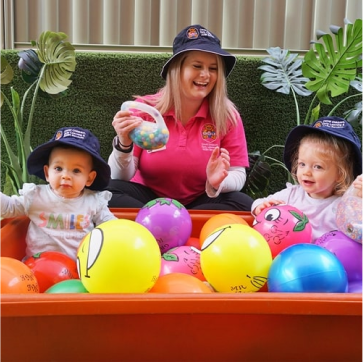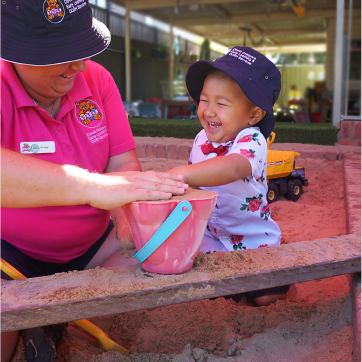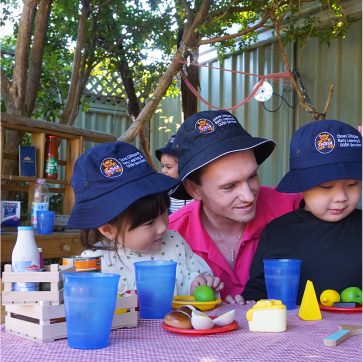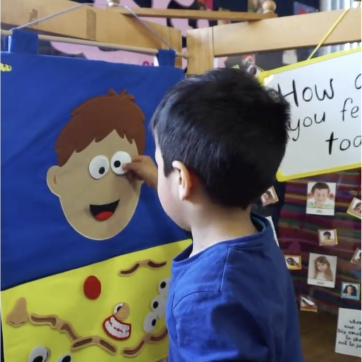



It’s a recurring theme here, the importance of play in childhood development…but one that bears repeating:
Play is not something children use to take a break from their work. Play is the work of childhood.
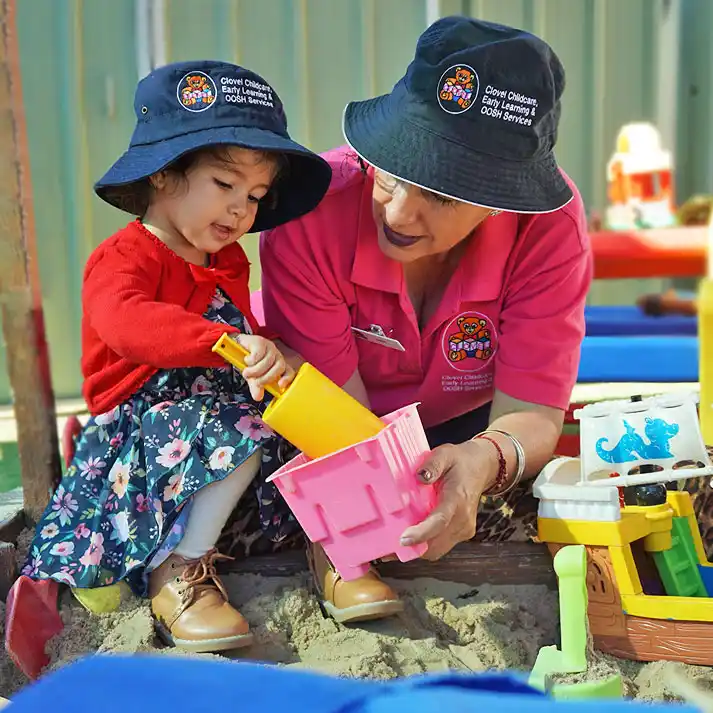
Play is an integral part of a child’s cognitive development, or their ability to think, comprehend, imagine, communicate, recall, and infer what may happen next in a sequence. Preschool children are naturally curious…which explains why they ask so many questions. Through play, children learn important concepts like cause-and-effect, problem solving, and inference. And the more your child plays, the better he or she will get at critical thinking, so we’ve gathered a handy list of 5 ways you can promote cognitive development through play.
Memory Games
Who doesn’t love a raucous round of Go Fish or card matching? Not only are these games entertaining for preschoolers, but they’re also great at promoting cognitive development.
With Go Fish, children must collect matching sets of the same fish card, either by asking other players for the cards or by “fishing” from the deck. Go Fish helps preschoolers practice their critical thinking, sorting, and matching skills. And learning to read the facial cues from other players teaches important communication and social skills.
Similarly, matching games—where a deck of cards is laid out face down and players take turns turning over two cards in an attempt to find a matching pair—challenge memory and problem-solving skills. There’s nothing quite like the look of pride and satisfaction that blooms on the face of a child who finds his or her first match!
Outdoor Play
Nature is perfect for encouraging cognitive development. There are so many questions to ask and so many new things to see in the great wide open! Take a walk in your backyard or local park and encourage your child to ask questions about what they see. How do ducks float on the water? Why do leaves fall from the trees in certain seasons?
You can facilitate your child’s interaction with nature through play. Create an outdoor scavenger hunt (or, if you aren’t feeling creative, print one from the internet for free…we love this one!).
Another option is nature bingo cards. Take a blanket (and perhaps a picnic lunch) to the park along with your bingo cards. As you eat, encourage your child to look around and find things in nature that are on their bingo card.
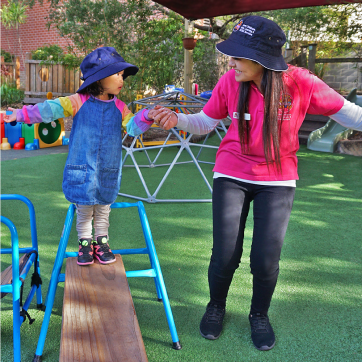
But you don’t even need to print anything to encourage cognitive development while outdoors. Challenging your child to point out all the yellow flowers they see while on a walk encourages sorting and critical thinking. And allowing them to play on outdoor playscapes gives them time to practice socialisation, problem solving, and cause-and-effect.
Puzzles
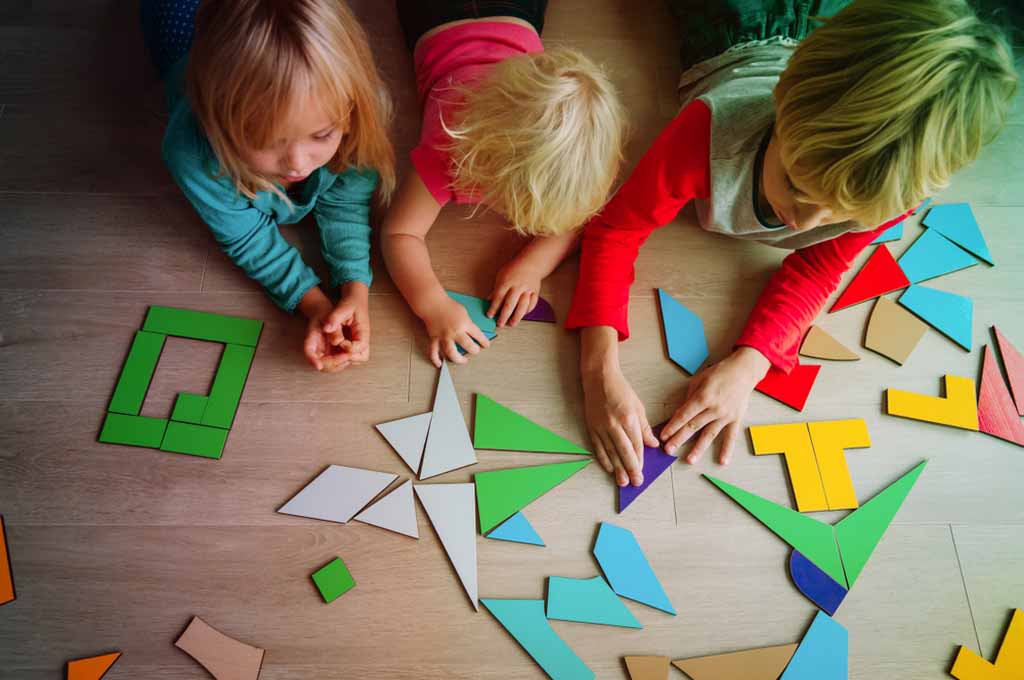
Putting a puzzle together is an excellent way to strengthen cognitive development. Learning what to do when a piece doesn’t fit hones problem-solving skills and patience. Parents can help in this aspect by modeling proper behavior during puzzle play. Instead of getting frustrated or angry when a piece doesn’t fit, parents can voice the fun in the challenge…
Wow! This puzzle is tricky! I can’t wait to find the right piece.
We did it! You worked really hard and didn’t give up!
Sorting Games
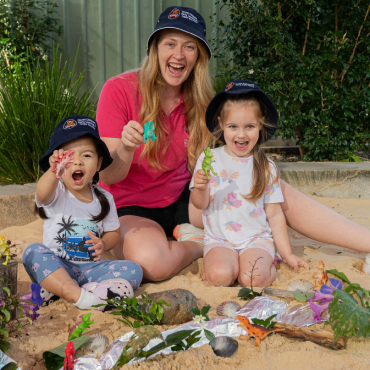
Sorting is one of those tasks that is so fun, children don’t realise they’re learning as they play! There are many different types of sorting games available for purchase. This dinosaur sorting game comes with everything you need…and the colorful little dinos are a huge hit with preschoolers!
But, once again, there’s no need to spend money on a sorting game when you can create them on your own. Ask your child to help you sort socks fresh from the laundry into matching pairs. Or have them divide their stuffed animals by type (dog, cat, bear, etc.) or their toy car collection by color. Any form of sorting boosts, learning, thinking, and problem-solving skills.
Telling Jokes
Preschool is where children really begin to develop their sense of humor in a more verbal way. They move beyond acting in silly ways to garner a laugh and begin using language to do so. Telling jokes requires children to have a firm grasp of language, imagination, and perspective.
Try making riddles and puns part of your daily routine, either while getting ready for the day or on the way to school. As your child gets comfortable with jokes and begins to “get them”, encourage them to try to make up a joke on their own.
Boosting the cognitive development of preschoolers isn’t hard. There are so many everyday experiences that can be used to get them thinking critically and solving problems. The key is to provide a variety of options and let your child take the lead depending on what interests them in the moment.
Thanks for reading,
Clovel Childcare
1300 863 986