
A child stacking blocks, pretending to run a café or searching for insects in the garden may appear to be simply having fun. Yet beneath the surface, their mind is actively making connections, testing ideas and solving problems.
Learning through play supports cognitive development by giving children meaningful opportunities to explore how the world works. Through hands-on experiences, they strengthen memory, concentration, language, creativity and reasoning. They also learn to make decisions, adapt their ideas and persist when something does not work the first time.
At Clovel Childcare, play is an important part of our approach to early learning. Our educators create nurturing environments where children can follow their curiosity while participating in carefully planned experiences that support their individual development.


Cognitive development refers to how children think, learn, remember, communicate and understand the world around them. It includes abilities such as:
These abilities develop gradually throughout childhood. Every child follows an individual pathway, influenced by their interests, experiences, relationships and environment.
During the early years, children learn by interacting with people and actively exploring their surroundings. They touch, listen, observe, move, ask questions and repeat actions. Play brings these experiences together in a way that feels enjoyable and meaningful.
Play gives children the freedom to explore an idea without being limited to one correct answer. They can experiment, make mistakes, adjust their approach and try again. This process helps children become active participants in their learning.
The Early Years Learning Framework recognises play-based learning with intentionality as an important practice in early childhood education. Play-based programmes build on children’s interests while educators thoughtfully extend their knowledge, skills and understanding.
For example, when children construct a tower, they may explore balance, shape, size and spatial awareness. If the tower falls, they consider what happened and try a different approach. The experience introduces early mathematical and scientific thinking while also encouraging persistence.
Because the activity is engaging, children are often motivated to concentrate for longer and revisit the challenge several times.
Children benefit from a varied programme that allows them to explore ideas in different ways. Each type of play offers valuable opportunities for cognitive growth.
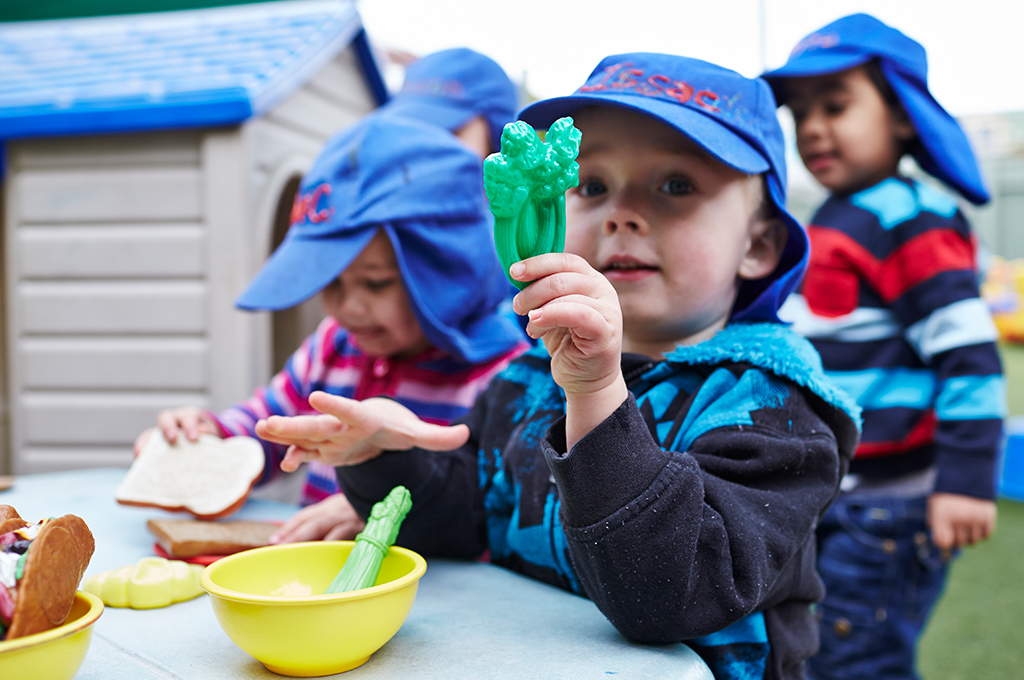
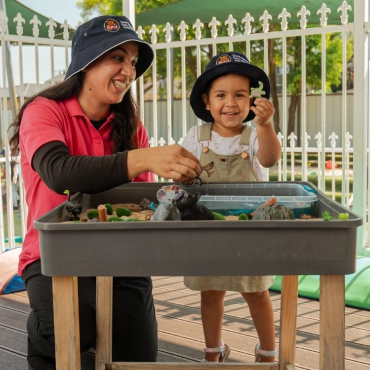
When children pretend to be doctors, shopkeepers, parents or explorers, they use memory and imagination to recreate situations they have observed. They decide what should happen, assign roles and use language to develop a shared story.
Imaginative play supports flexible thinking because children must consider different possibilities. A cardboard box might become a bus, house or rocket. This ability to allow one object to represent another contributes to symbolic thinking, which is also important for understanding words, numbers and pictures.
Role play also helps children organise ideas into sequences. They may decide that a customer chooses an item, pays for it and receives a receipt. These playful scenarios encourage planning, communication and an understanding of everyday routines.
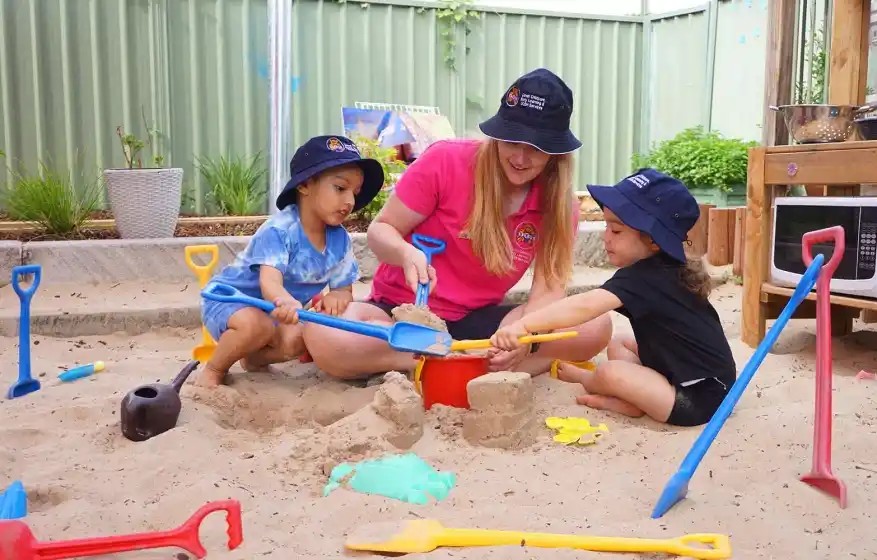
Building with blocks, recycled materials, sand or connecting pieces introduces children to early concepts involving shape, measurement, balance and position.
Children may compare the height of two towers, work out how to strengthen a bridge or select pieces that fit together. These experiences naturally support numeracy and mathematical development without making learning feel separate from play.
Construction activities also help children visualise an idea and turn it into something physical. They learn to plan, evaluate their work and make changes when the result differs from what they imagined.
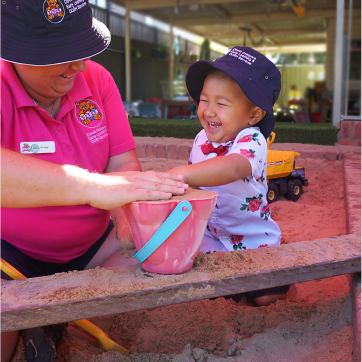
Sensory experiences invite children to investigate materials using touch, sight, sound and sometimes smell. Water, sand, clay and natural materials can encourage sustained exploration and discovery.
Pouring water between containers, for example, can introduce ideas about capacity, volume and cause and effect. Mixing colours allows children to make predictions and observe change. Sorting leaves, shells or stones develops comparison and classification skills.
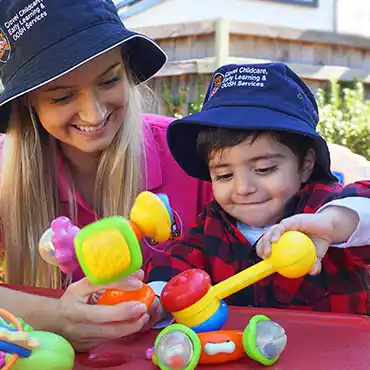
Sensory play can be particularly valuable for babies and toddlers, who build knowledge through physical interaction with their environment. Clovel’s Baby Program provides age-appropriate experiences that nurture curiosity and support early development in a safe, caring environment.
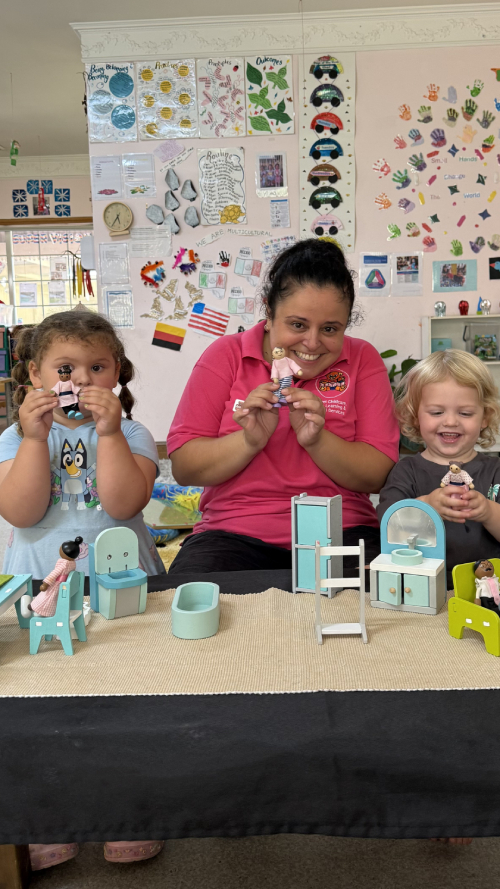
Puzzles, matching activities and sorting games encourage children to examine information, identify relationships and test possible solutions.
Completing a puzzle requires children to consider shape, size, colour and orientation. If one piece does not fit, they must reassess their choice. Through repeated practice, they develop patience, memory and visual-spatial awareness.
Games with simple rules also challenge children to remember instructions, wait for their turn and adapt their actions. As their abilities grow, educators can introduce more complex challenges that extend their thinking.

Language plays a central role in cognitive development. Stories help children understand sequences, predict events and connect new ideas with their own experiences.
During shared reading, educators may ask open-ended questions such as, “What do you think will happen next?” or “Why do you think the character did that?” These questions encourage children to move beyond recalling details and begin explaining their reasoning.
Songs, rhymes and word games strengthen listening skills and introduce patterns in language. Clovel’s Literacy Program uses engaging experiences to support children’s communication, vocabulary and early literacy development.
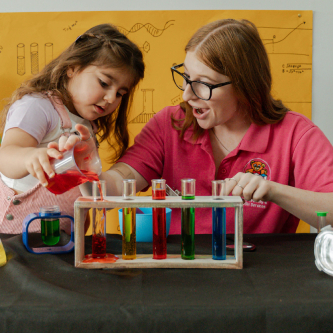
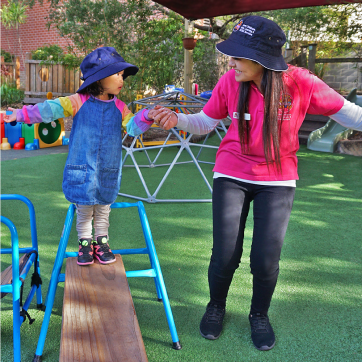
Cognitive learning does not only happen while children are sitting at a table. Outdoor and physical play require constant observation, planning and decision-making.
When children move through an obstacle course, they assess distance, direction and risk. They remember the sequence, adjust their movements and decide how to overcome each challenge. Group games also require them to understand instructions and respond to changing situations.
These experiences connect thinking with movement while supporting coordination and confidence. Learn more about Clovel’s Physical Activity Program.
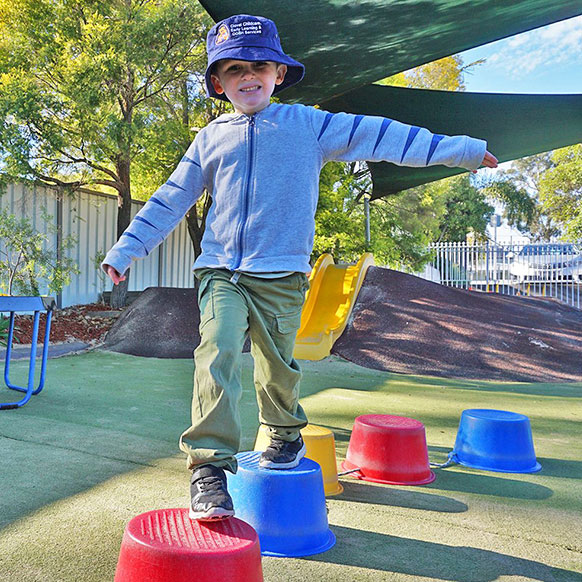
In effective play-based learning, educators do more than provide toys and supervise activities. They observe children closely, identify emerging interests and plan experiences that can extend their thinking.
An educator might introduce measuring tools after noticing children building in the sandpit. They may add menus, notepads and play money to a pretend café or encourage children to draw a plan before constructing a building.
Educators also use thoughtful questions to deepen learning, including:
These questions encourage children to explain their ideas rather than simply receive an answer. The educator remains available to guide the experience while giving children appropriate freedom to make decisions and discoveries.
Families do not need expensive toys or complicated activities to support cognitive growth. Everyday routines provide many valuable opportunities for learning.
Parents and carers can:
Open-ended materials are especially helpful because they can be used in many ways. Blocks, fabric, cardboard boxes and natural objects allow children to decide what to create, encouraging greater imagination than an activity with a fixed outcome.
Adults can support play by showing interest without taking control. Instead of correcting a child immediately, ask them what they are trying to do and whether another approach might help.
One of the most valuable aspects of play is that mistakes feel manageable. A block tower can be rebuilt, a puzzle piece can be moved and a new rule can be introduced when a game is not working.
These small challenges help children understand that difficulty is part of learning. With encouragement, they develop persistence and become more willing to approach unfamiliar problems.
Rather than focusing only on the finished result, adults can acknowledge the child’s process: “You kept trying different pieces until you found the right one,” or “Your first bridge fell, so you made the base wider.”
This kind of feedback helps children recognise the strategies they used and builds confidence in their ability to learn.
Clovel Childcare offers a loving, stimulating environment where children can explore their interests and develop important foundations for lifelong learning.
Our educational programmes bring together play, intentional teaching and responsive relationships. Children participate in experiences involving literacy, numeracy, science and technology, physical activity and the performing arts. These experiences are adapted to children’s ages, abilities and interests.
Our qualified educators observe each child’s progress and use their observations to plan meaningful learning opportunities. Through communication with families, we build a clearer understanding of each child and support continuity between home and the early learning environment.
Play is not separate from learning. For young children, it is one of the most natural and powerful ways to learn.
Every tower built, question asked, story invented and problem solved contributes to a child’s developing understanding of the world. With supportive adults, engaging environments and time to explore, children can strengthen the cognitive skills they will use throughout school and beyond.
Clovel Childcare is committed to helping children become curious, confident and enthusiastic learners. To learn more about our play-based educational programmes, contact Clovel Childcare or arrange a tour of your nearest centre.
Yes. During play, children practise skills such as concentration, memory, communication, planning and problem-solving. Play allows them to explore ideas actively and connect new information with their existing experiences.
Open-ended resources such as blocks, puzzles, art materials, books, sensory materials and pretend-play items can support cognitive development. The most valuable resources encourage children to imagine, investigate and use them in different ways.
Educators observe children’s interests, introduce relevant materials and ask open-ended questions. They may also model a strategy, add a new challenge or encourage children to explain their ideas.
Play-based learning can help children develop language, early literacy and numeracy, concentration, independence and problem-solving. It also supports the confidence and curiosity children need to participate positively in future learning.
Adults can support and extend play without controlling every part of it. A balanced approach gives children opportunities to make choices and test ideas while receiving guidance when it adds value to their learning.

Lyn Connolly is the Founder and Company Director of Clovel Childcare & Early Learning Centres, a family‑owned group of eight centres across Western Sydney established from her first service at Merrylands. Active in early childhood education since 1977, she also serves as President of the Australian Childcare Alliance (ACA) NSW, representing providers in state and federal consultations, media, and public hearings.
Choosing your child’s childcare and early learning centre is one of the biggest decisions you will ever have to make for your child. If you have more questions for us or would like to book a tour of one of our centres, please fill out our form and we’ll be in touch!

Join our Clovel newsletter to keep up to date with the latest news, blogs, tips & advice or follow us on YouTube, Facebook and Instagram.