




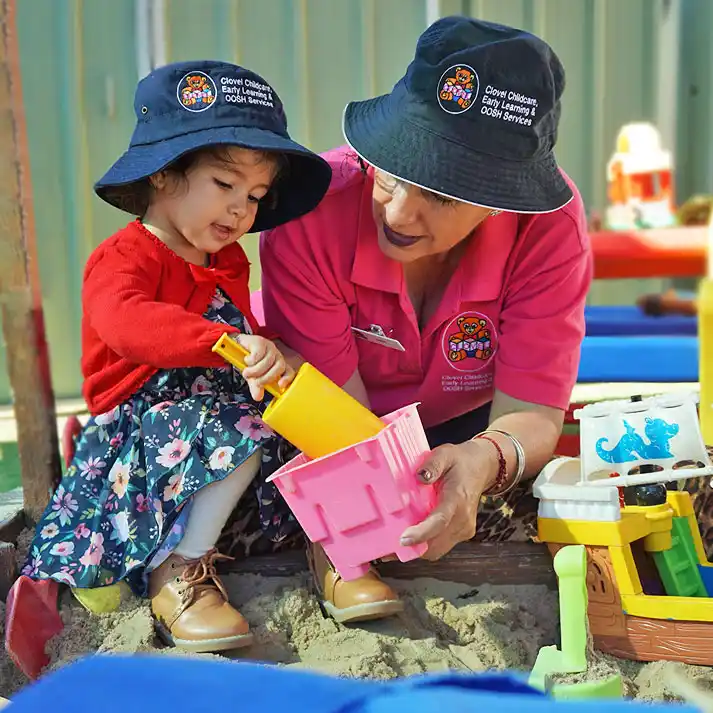


No decision feels as important as choosing the right childcare centre for your child. After all, these are the professionals who will care for and educate your child for the majority of the day, so it’s natural to want to make the best possible choice.
But how do you know what to look for when evaluating child care facilities?
We’ve gathered a list of 9 tips that will help you find the right childcare center for your child and allow you to feel good about leaving your little love in their care.
1. Confirm licensing and regulation requirements are up to date.
First and foremost, any facility you consider should be fully licensed and regulated according to NSW standards. You should also verify that the childcare centre is insured and prepared to cover expenses in the event of an accident.
2. Ask if they follow current medical guidelines.
Medical advice can change frequently when it comes to childcare, so it is important that the childcare center is up to date on current best practices. Ask what vaccinations are required for children to attend and what protocol the facility follows when a child is sick. Confirm that staff members are trained in CPR and first aid and verify that the centre follows current medical recommendations for positioning infants in cribs and crib safety.
3. Take a good look around. Does the centre appear safe?
Stop by the centres you are considering for a good look around the facility. Are they following safety guidelines? Are dangerous chemicals and cleaning products stored out of the reach of children.? Are cabinets containing sharp objects or tools locked?
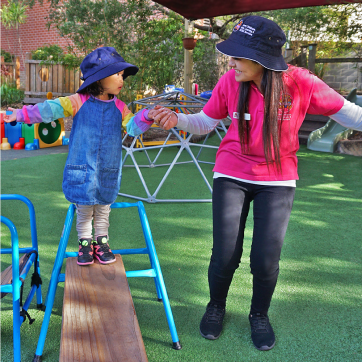
And don’t forget to evaluate the playground area. Is the equipment in good, working condition with no loose or rickety parts and appropriate for the age of the children? Is the playground surface covering appropriate?
If you are curious about the NSW requirements for playground installation and maintenance, you may read more by clicking here.
4. Ask about the education/qualification of the staff.
Early childhood educators are just that—professional educators who have been trained to teach and care for young learners. Ask about the education and/or qualifications for the centre’s director and your child’s potential teacher to confirm they have the proper educational background and training.
5. Talk to your child’s potential teacher.
Schedule a meeting with the person who will be teaching your child should you choose to enroll your child at the centre. Ask them how they approach teaching in general, and how they customize education for students.
Teachers should be excited at the prospect of teaching. No matter how accredited or experienced a teacher may be, if he or she shows no love for the art of teaching and little enthusiasm for working with young minds, scratch that centre off your list and move on to the next.
6. Look for a centre with a low child-to-teacher ratio.
When it comes to education, class size counts. Talk to the school to find out how many children are assigned to each teacher, and remember—the younger the children, the lower that ratio should be.
Placing your child at a centre with a low child-to-teacher ratio means the instructor will be able to give your child the attention he or she deserves. It also allows teachers to thoroughly evaluate each child and make sure they are hitting their developmental milestones.
7. What is the discipline protocol at the centre?
Discipline is one of those touchy subjects that can ruin a childcare experience if parents and staff are not on the same page.
Talk to the centre administration to find out what discipline procedures are followed to resolve conflicts that will inevitably arise in the classroom.
8. Ask about employee turnover
Consider a high turnover rate amongst staff at a childcare centre to be a red flag as it’s often a symptom of a larger problem. The inability to hold onto staff long term can be an indicator of poor management. Regardless of the reason, your child will likely suffer if they are repeatedly forced to get accustomed to a new teacher, so look for schools where teachers stay put.
9. Talk to your child
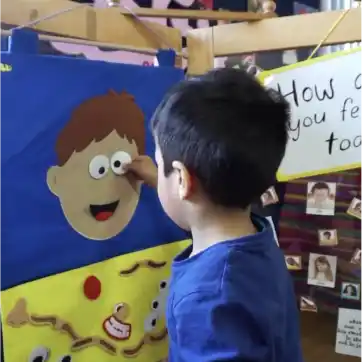
Once you’ve chosen a childcare centre, check in with older children to see how they like their new classroom. While a certain amount of nervousness and/or separation anxiety is normal when starting a new school, your child should eventually get used to the routine. Ask them how they feel about their classmates and teacher…and be prepared to advocate for them if they appear to be struggling to find their place in their new learning environment.
Choosing the right childcare centre for your child requires research and effort, but knowing your child is in the best facility for his or her needs makes all of your hard work worth it in the end.
Thanks for reading,
Clovel Childcare
1300 863 986